
Every week I receive messages from worried brand owners who just discovered their "certified safe" cat toys triggered customer complaints. The most common story? A plush mouse passed all safety tests, but cats shredded it within days and swallowed fabric pieces. The material wasn’t toxic, yet cats ended up at the vet.
No single material is universally unsafe for cat toys. Safety depends on how cats interact with the material, how the toy is constructed, and how long the material maintains its integrity under real use conditions. Certifications prove baseline chemical safety, but cannot predict whether a material will splinter, fray, or detach when a cat chews it daily.
After ten years manufacturing cat toys for global brands, I have seen the same pattern repeat: buyers focus on eliminating "toxic substances" while ignoring structural failure modes. The result is toys that pass lab tests but fail in homes. Let me show you how to evaluate material risk the way we do during supplier audits.
Why do safety certifications not guarantee cat toy safety?
Brand owners often ask me to confirm their supplier’s EN71 or ASTM F963 certificates. They assume these prove the toys are safe for cats. This assumption creates the most common source of customer complaints in our industry.
Child toy safety standards test whether materials will acutely harm a child who mouths a toy briefly. They do not simulate a cat chewing the same spot for thirty minutes daily, or a cat’s stomach trying to digest swallowed fibers. The test conditions do not match actual cat behavior.
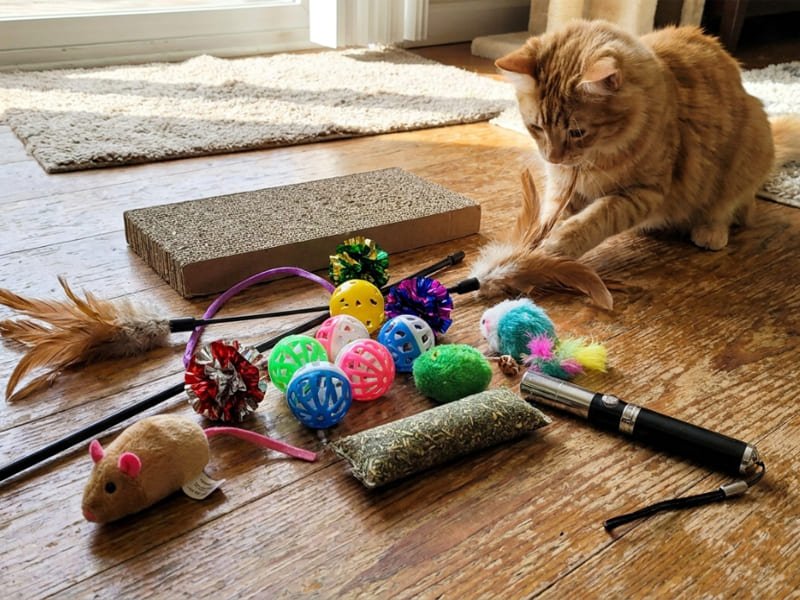
How certification limits create hidden risks
I once worked with a client who selected polyester fleece based on a supplier’s ASTM F963 report. The report confirmed no toxic chemicals and acceptable colorfastness. Three months after launch, customers reported their cats vomited fabric balls. The material passed chemical safety tests, but the fleece structure allowed cats to pull out individual fibers with their tongues.
The certification tested chemical composition, not durability under repeated licking and biting. This gap appears in three ways:
| Risk Type | What Certification Tests | What Cat Behavior Creates |
|---|---|---|
| Chemical exposure | Single extraction in neutral solution | Repeated saliva contact with enzymes over months |
| Physical integrity | Pull force on assembled toy | Localized stress from fang penetration at same point |
| Component retention | Whether small parts exist initially | Whether attachment weakens after moisture exposure |
When I audit supplier materials, I add three questions the certification cannot answer: Will this material change texture after repeated saliva exposure? Can a cat’s fang penetrate it enough to create tear initiation points? If a component detaches, will the exposed edge be sharp or fibrous?
The certification-to-reality translation problem
A supplier recently sent me a test report for "textile toy materials" when the buyer needed materials for a cat chew toy. The report met child safety standards for fabric dolls. It did not test abrasion resistance, tear propagation, or fiber release under grinding motion.
I told the buyer to request additional tests: cyclic compression to simulate repeated biting, surface integrity after enzyme solution exposure, and fiber pull-out force measurement. These tests revealed the material would fuzz heavily after two weeks of typical cat play.
Certifications establish a floor, not a ceiling. They confirm the material will not poison a cat. They do not confirm the material will stay intact long enough to avoid becoming an ingestion hazard. Buyers who stop at certificates inherit that gap.
Are natural materials safer than synthetic options for cats?
Three out of five inquiries I receive mention "natural materials" as a safety requirement. Brand owners assume wood, cotton, and feathers carry less risk than plastics or synthetic fabrics. This assumption causes more material-related returns in my experience than any other factor.
Natural materials are not inherently safer. They fail in different ways than synthetics. Untreated wood splinters into sharp fragments, cotton rope frays into swallowable threads, and loose feathers block digestive tracts. The risk depends on structural design and durability, not whether the material came from a plant or a factory.
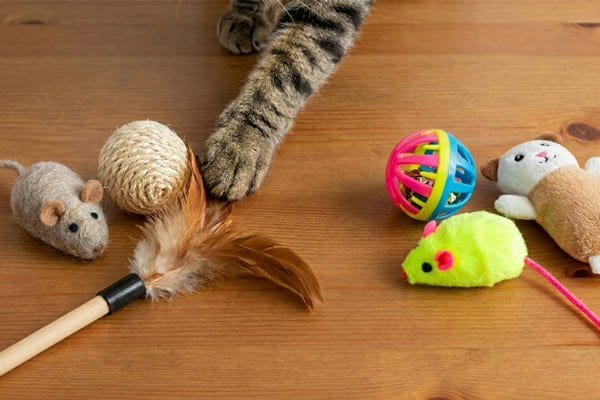
When natural materials concentrate risk
I worked with a client who designed a cat teaser using real feathers. Customers loved the natural aesthetic. Within two months, we started receiving complaints: cats were vomiting feather pieces, and one required surgery to remove a blockage. The feathers were untreated and "chemical-free," but their structure created a perfect ingestion hazard.
Feathers have barbs that hook together. When a cat bites a feather toy, individual barbs separate and stick to the tongue. The cat swallows them reflexively. Synthetic feather alternatives use smooth fibers that slide off the tongue more easily. The synthetic version reduced ingestion complaints by ninety percent for this client.
Natural materials fail through structural breakdown:
- Wood: Grain separation creates splinters with sharp points that puncture tissue
- Cotton rope: Individual fibers separate and tangle in intestines when swallowed in volume
- Sisal: Coarse fibers abrade gum tissue and form dense masses in stomachs
- Leather strips: Untreated leather softens under saliva and tears into irregular chunks
Material origin versus material behavior
A brand owner once insisted on cotton filling for plush toys because "cats evolved eating natural prey." This reasoning confuses material origin with material performance. Prey animals do not contain long fibers that tangle in intestines. Cotton batting does.
I suggested polyester fiberfill with short, crimped fibers. Individual fibers pass through the digestive tract more easily than long cotton threads. The client initially resisted, then agreed after I showed photos of cotton rope toys that cats had shredded.
The decision framework changed from "natural or synthetic?" to "what happens if the cat swallows this?" Polyester fiberfill in a durable outer fabric became lower risk than cotton batting in the same fabric. Material behavior under worst-case scenarios matters more than material origin.
Buyers ask me how to evaluate suppliers when they cannot visit factories or run their own lab tests. I tell them to watch for three patterns in supplier responses that predict material problems six months after production.
When a supplier provides generic lab reports without specifying test conditions that match your use case, when material specifications change between samples and bulk orders without explanation, or when the supplier cannot describe how their material performs under specific cat behaviors, the buyer inherits unknown risk.
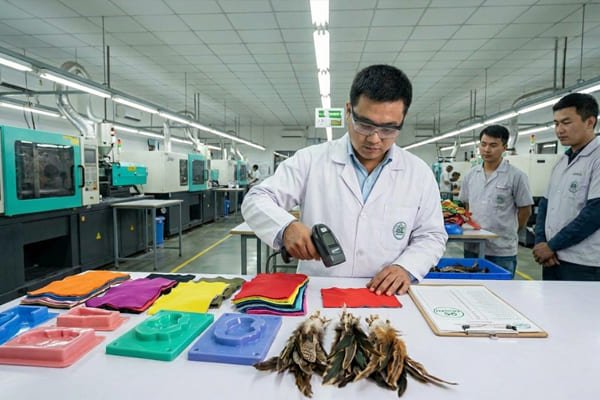
The generic certification problem
A supplier sent a client a test report for "toy-grade polyester fabric." The report confirmed heavy metal limits and flammability standards. It did not specify the fabric’s weave density, coating type, or surface finish. These details determine whether cats can hook their claws into the fabric and create runs.
I asked the supplier three questions: What is the thread count and weave structure? Does the fabric have any coating, and if so, can you provide abrasion test results? How does the fabric perform in a pilling test after ten hours of friction?
The supplier could not answer. They were reselling material from another factory and only possessed the original factory’s generic certificate. When the bulk order arrived, the fabric pilled heavily after minimal play. Cats ingested the pilled fibers.
Mid-production material substitutions
I have seen four cases where suppliers changed materials between sample approval and bulk production. In each case, the supplier claimed the new material was "equivalent" and "also certified." In each case, the material change created problems.
One example: A supplier substituted a different polyester fleece that used shorter fibers. The new fleece shed more easily. Another example: A supplier changed from mechanical stitching to ultrasonic bonding for fabric seams, creating brittle joints that separated when cats tugged.
When I catch these substitutions during inspection, I ask for three things: documented approval from the buyer, test reports for the new material under the same conditions as the original, and sample production using the new material for buyer verification. Most suppliers cannot provide these because they made the change to reduce cost without evaluating risk.
Material specification without behavioral context
A supplier once told me their sisal rope was "premium grade, tightly wound, and perfect for cat scratchers." I asked how the rope performed after cats scratched it for one hour daily for two weeks. The supplier said the rope was "durable."
I requested photographic documentation of rope condition after accelerated use testing. The supplier had never performed this test. When we tested samples, the rope frayed at anchor points within five days. Loose sisal fibers were everywhere.
Suppliers who understand material risk talk about failure modes, not just initial specifications. They can describe how their material degrades, not just that it meets standards. When a supplier only references certification documents and cannot explain material behavior under stress, they are selling compliance paperwork, not material understanding.
How do material combinations create unexpected hazards?
The question I wish more buyers would ask is not "is this material safe?" but "how do these materials interact when a cat uses this toy?" Most safety problems I have traced back to returns involved multiple materials that individually passed tests but created problems together.
Non-toxic materials can become hazards when their combination creates detachment risks, chemical interactions, or structural failures. A fabric that is safe on its own becomes dangerous when attached with weak stitching, and a non-toxic plastic component becomes a choking hazard when the adhesive holding it fails.
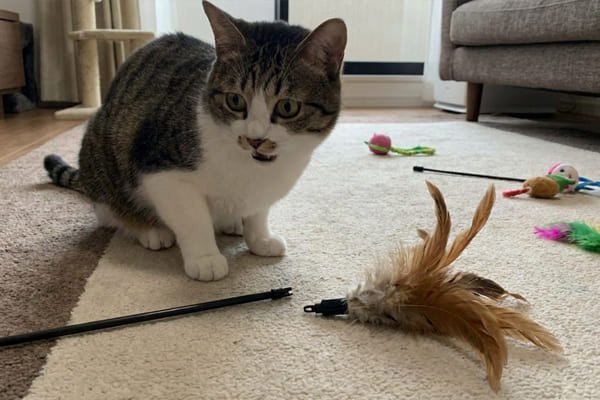
Attachment method failures
I reviewed a returned toy that used felt eyes glued onto a plush mouse body. Both materials passed safety tests. The complaint stated the cat swallowed an eye. When I examined the toy, I found the problem: the adhesive weakened under repeated saliva exposure. The felt eye was safe. The glue was technically non-toxic. Together, they created a detachment hazard.
The buyer had focused on material certificates and missed the attachment evaluation. I now require clients to test component retention after moisture exposure. We soak assembled toys in enzyme solution for eight hours, then apply pull force to every attached component. This test catches adhesive failures before production.
Material incompatibility under stress
A client designed a toy with a wooden stick inserted into a fabric body. Wood and fabric are both common, relatively safe materials. Customers reported the wooden stick broke inside the fabric, creating sharp splinters that punctured the toy. Cats bit into the fabric and encountered sharp wood fragments.
The problem was material hardness mismatch. Cats bit the flexible fabric, which distributed force poorly to the rigid wood. The wood experienced concentrated stress at the insertion point and fractured. A rubber-coated wooden stick or a flexible plastic core would have deformed rather than fracturing.
Material combination risk follows a pattern: whenever hard and soft materials meet, the interface concentrates stress. When materials with different durability levels combine, the weaker material fails first and exposes the stronger material in an unsafe configuration.
Chemical migration between components
A supplier used polyester fabric with foam padding inside. Both materials passed individual safety tests. After six months on shelves in warm warehouses, customers reported chemical smells. Lab analysis showed plasticizers from the foam had migrated into the fabric.
The plasticizers were within legal limits in the foam. The fabric had not been tested for plasticizer absorption. When combined in an enclosed toy stored at thirty degrees Celsius, plasticizers migrated and concentrated on the fabric surface where cats would lick.
I added a new test protocol: store assembled toys at thirty-five degrees for thirty days, then test surface materials for chemical migration. This catches chemical interactions that do not appear in individual material tests.
What decision shortcuts cause preventable material failures?
After handling hundreds of material-related complaints, I notice three decision patterns that reliably lead to problems. Buyers make these choices to save time or reduce cost, not realizing they concentrate risk in ways that certifications cannot catch.
Choosing the cheapest certified material without durability testing, swapping materials mid-production without re-evaluating failure modes, and assuming child toy standards automatically apply to cat toys without considering behavioral differences all increase the probability of material-related returns and customer complaints.
The lowest-cost certification trap
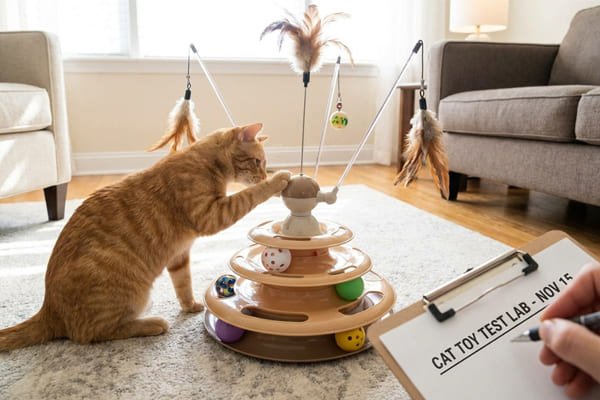
A client requested quotes for cat teaser wands with feather attachments. Three suppliers offered certified feathers at different prices: eight cents, twelve cents, and eighteen cents per unit. The client chose the eight-cent option because "all three are certified to the same standard."
Two months after launch, return rates hit fifteen percent. Cats were pulling feathers apart and ingesting barbs. When I examined samples from all three suppliers, I found the eight-cent feathers used shorter, more brittle quills that separated easily under biting force. The eighteen-cent feathers used longer, more flexible quills that bent rather than breaking.
All three met child safety chemical limits. None of those tests measured structural integrity under repeated biting. The client saved ten cents per unit and spent three dollars per unit processing returns.
Mid-production material swaps
I have encountered four cases where buyers approved material changes during production to meet delivery deadlines. In each case, the buyer asked only "is the new material also certified?" without evaluating how the change affected the total toy design.
One example: A supplier could not source the approved orange dye in time and substituted a different orange dye with the same safety certificate. The new dye had slightly less colorfastness. Cats who chewed the toys ended up with orange stains on their fur. Customers assumed the dye was toxic and left negative reviews.
The dye was non-toxic. The colorfastness difference was within standards. But customers do not read standards. They see orange saliva and conclude the toy is dangerous. The buyer saved one week of production time and lost two months fighting negative reviews.
Standards misapplication
Buyers frequently ask if EN71 or ASTM F963 certification means their cat toys are safe. I explain these are child toy standards. They test whether a child who puts a toy in their mouth briefly will be poisoned. They do not test whether a cat who chews the same toy for hours will ingest dangerous amounts of material.
A client launched plush cat toys certified to EN71. The toys passed heavy metal tests and small parts requirements. Customers complained that cats shredded the toys within days and vomited fabric pieces. The toys met child safety standards because children do not have fangs and do not chew continuously for thirty minutes.
I helped the client add cat-specific durability tests: puncture resistance with a simulated fang, abrasion testing with repeated rubbing motion, and seam strength after saliva exposure. These tests revealed weaknesses that child toy standards never evaluated.
How should buyers evaluate material risk systematically?
Brand owners want a simple checklist of safe and unsafe materials. I cannot provide one because safety is not a material property. It is an outcome of how cats interact with materials under specific design configurations. But I can share the evaluation framework we use during supplier audits.
Evaluate material risk by asking four questions: How does this material change under repeated saliva exposure? What happens if a cat’s fang penetrates this material? If a component detaches, what hazards does it create? Does this material combination create interaction effects that individual tests miss?
The saliva exposure test
Most materials behave differently when wet with saliva repeatedly. Cotton loosens, adhesives weaken, and some dyes migrate. We test this by soaking assembled toys in artificial saliva solution for eight hours, air drying them, then repeating the cycle five times. This simulates two weeks of daily play.
After cycling, we inspect for three changes: surface texture changes that create fiber release, component attachment degradation, and color transfer onto white cloth. These changes predict real-world complaints better than chemical composition certificates.
The fang penetration simulation
Cats have four long canine teeth that concentrate force on small areas. We test material response by pressing a pointed probe with a three-millimeter tip into materials with gradually increasing force. We record the force at which the probe penetrates, and examine the resulting damage.
Materials that tear cleanly are lower risk than materials that fuzz or splinter. Materials that deform and recover are lower risk than materials that crack. This test catches structural failure modes that pull tests miss because pull tests distribute force across wider areas.
The worst-case component test
For every toy with multiple components, we deliberately destroy one sample to see what happens when cats access internal materials. We cut open plush toys to examine filling, we break plastic components to see if they create sharp edges, and we pull until attachments fail to see what gets exposed.
This test reveals whether internal materials are as safe as external ones. I have found toys with certified outer fabric and uncertified foam filling, toys with safe plastic shells and sharp metal armatures inside, and toys with non-toxic exterior components attached with toxic adhesives.
The interaction effects inspection
We place samples under stress conditions that combine multiple factors: moisture plus mechanical stress, temperature plus chemical exposure, or pressure plus abrasion. Real cat play involves combinations, not isolated stresses.
One test that catches many problems: we put assembled toys in sealed containers at thirty-five degrees Celsius for seven days, then check for odors, discoloration, and material degradation. This simulates warehouse storage plus home use in warm climates.
These tests do not replace certifications. They supplement certifications by evaluating material behavior under realistic cat interaction scenarios. Buyers who add these tests to their quality requirements reduce material-related returns by sixty to seventy percent based on our client data.
Conclusion
Material safety in cat toys depends less on what the material is and more on how cats interact with it. Certifications establish chemical baselines