
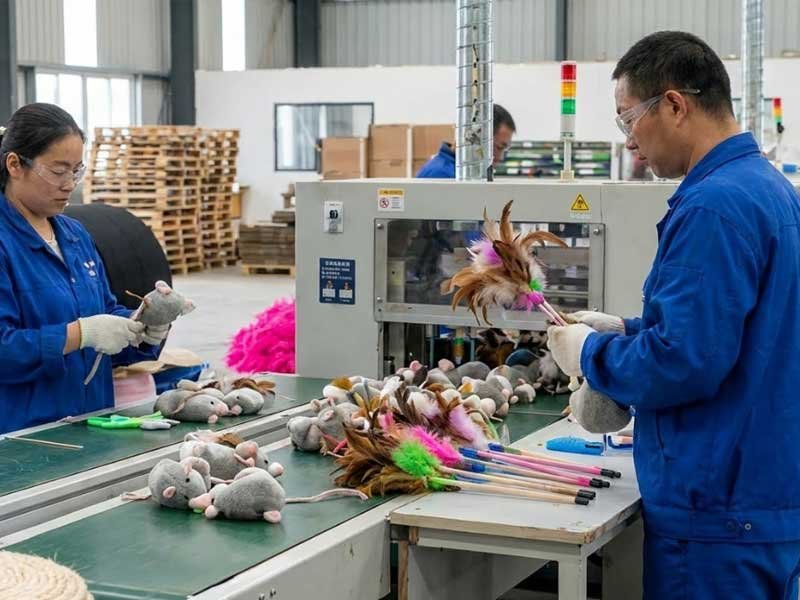
You are about to launch your new line of cat toys, but now you are stuck on material choices. You know the wrong fabric can mean product returns, safety complaints, or price points that kill your margins. You have been searching for the "best material," but every supplier tells you something different.
There is no single best material for cat toys—the right choice depends on toy type, target price point, and how your customer will actually use the product. Material selection is a business decision framework that balances durability, cost structure, and market positioning, not a one-size-fits-all answer.
I have been answering client inquiries about cat toy materials for years now. Every week, someone asks me which fabric they should use. What I have learned is that buyers often approach material selection backwards—they ask for names like "organic cotton" or "felt" without first defining what stress their toy will face or what retail price they need to hit.
Does toy type determine material choice?
The biggest mistake I see is when buyers assume a single material can work across their entire product line. A chase toy that gets batted across the floor needs different fabric than a chew toy that goes in a cat’s mouth, yet many new brands try to use the same material for both.
Different toy types create different mechanical stress patterns.1 Chase toys need abrasion resistance, chew toys need bite-proof density, and plush toys need soft hand feel—material performance only matters when matched to actual use case, not in isolation.

When you are selecting material, you first need to define what your toy actually does. I created this breakdown based on common inquiry patterns from clients:
| Toy Type | Primary Stress | Material Priority | Common Failure Mode |
|---|---|---|---|
| Chase toys (balls, mice) | Floor abrasion, impact | Surface durability, shape retention | Fabric pilling, stuffing leakage |
| Chew toys | Bite pressure, saliva exposure | Density, non-toxic coating | Material breakdown, loose threads |
| Plush toys | Kneading, carrying | Soft texture, seam strength | Seam splitting, stuffing clumping |
| Interactive toys (wands) | Pulling force, attachment stress | Connection point strength | String breakage, detachment |
| Puzzle toys | Pawing, pushing | Structural stability, grip texture | Component loosening, surface wear |
I had a client last year who wanted to use felt for everything because it looked premium in photos. Their chase toys started pilling after two days of normal play. We switched to a polyester blend for floor toys while keeping felt for hanging decorative pieces. Same brand, different materials, better match.
Material choice is not about finding one perfect fabric. It is about mapping material properties to mechanical requirements. A wand toy attachment needs tear-resistant fabric at stress points, while the decorative tail can use lighter material. When you design this way, you spend money on durability where it matters and save cost where it does not.
How does price point affect material selection?
Buyers often tell me they want premium materials, but then they show me a target retail price that makes no mathematical sense. Material cost directly determines your wholesale price2, which determines your retail positioning—you cannot skip this calculation.
Material selection must start with your target retail price and work backward through margin structure. Premium materials only make sense when your customer is willing to pay for them, and your distribution channel can support the higher price point.

I work with three distinct price tiers in most client conversations. Each tier supports different material choices and different business models:
Budget Tier ($2-$5 retail)
This is high-volume, fast-moving inventory. Material choice here is about minimizing production cost while avoiding quality disasters. We typically recommend polyester blends with basic stitching. The toys will not last forever, but they should survive normal play for their price point. Your customer is buying quantity, not heirloom quality.
Budget does not mean unsafe. You still need non-toxic materials and secure seams. But you are optimizing for acceptable performance at minimum cost. I have seen brands try to use organic cotton in this tier—it pushes production cost so high they cannot compete on retail shelves.
Mid-Range Tier ($6-$12 retail)
This is where most differentiation happens. You have room for mixed materials, reinforced stitching, and some premium touches. We often suggest cotton-polyester blends with double-seam construction. You can add features like crinkle paper or catnip pockets without destroying your margin.
Mid-range buyers want visible quality. The toy should feel substantial when they pick it up. Material texture matters here because customers are making purchase decisions in their hands. A buyer once told me their sales doubled when they switched from thin felt to a textured cotton blend—same toy design, better hand feel.
Premium Tier ($13+ retail)
Premium positioning needs premium materials to justify the price. Organic cotton, wool felt, thick canvas—materials with a story. But here is what buyers miss: premium material alone does not create premium perception. You need consistent branding, better packaging, and clear communication about why the material matters.
I had a startup client who spent extra on organic cotton but shipped toys in plain poly bags. Customers did not perceive any premium value because nothing signaled quality. We added custom tags explaining the material choice and upgraded to printed boxes. Same production cost increase, much better market reception.
Material Cost Reality Check
When you are choosing materials, you need to calculate the total cost impact:
| Cost Factor | Budget Impact | Decision Point |
|---|---|---|
| Raw material (per unit) | 15-30% of production cost | Can you absorb this in wholesale price? |
| Labor complexity | 20-40% of production cost | Does material require special handling? |
| Waste rate | 5-15% of material cost | How much scrap does cutting create? |
| Compliance testing | Fixed cost per material | Does certification cost justify volume? |
| Minimum order quantity | Working capital lock | Can you commit to MOQ for better pricing? |
Price-to-material matching is not about finding cheap materials. It is about finding the right quality floor for your market position. When you try to use premium materials in a budget price tier, you either lose money or cut corners somewhere else—usually in stitching or stuffing quality, which creates worse problems.
What makes a material safe versus compliant?
This is where I see the most confusion. Buyers use "safe" and "compliant" as if they mean the same thing, but they are completely different business requirements. Safe means non-toxic in general use. Compliant means you have documentation proving it meets specific market regulations.
Material safety is about chemical composition and physical risk. Compliance is about paperwork, testing protocols, and regulatory approval for specific markets. You can have a safe material that is not compliant with your target market, which blocks your entire product launch.
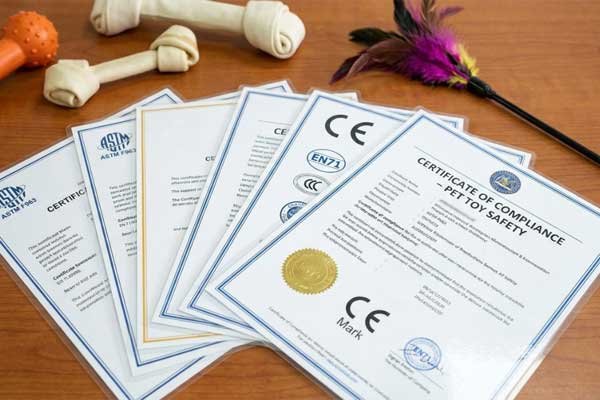
I have talked to dozens of clients who assumed their supplier’s material was "safe" because it looked fine and smelled normal. Then they tried to enter the EU market and discovered they had no test reports for phthalates or azo dyes3. Their material might have been perfectly safe, but they had no way to prove it to customs or retailers.
The Safety Stack
Material safety exists in layers. Each layer protects against different risks:
Chemical Safety: This covers dyes, finishes, and coatings. Your material should not contain heavy metals, toxic dyes, or hormone-disrupting chemicals. This matters because cats lick their toys4, and some fabrics are treated with chemicals that are safe for human clothing but problematic for pet products.
We recommend asking suppliers for material safety data sheets. If they cannot provide them, that is a red flag. You need to know what chemicals were used in dyeing and finishing processes.
Physical Safety: This covers choking hazards, loose threads, and detachable parts. Material density affects this directly. A loosely woven fabric sheds threads more easily than a tight weave. Button eyes that pull off easily are a physical safety issue, regardless of material.
I worked with a client whose plush toys used decorative buttons for eyes. The buttons were non-toxic (chemical safe), but they pulled off with minimal force (physical hazard). We switched to embroidered eyes using the same thread as the main fabric. Problem solved with no material change.
Durability Safety: This is less obvious but equally important. When a toy falls apart quickly, it creates new hazards—exposed stuffing can be ingested, broken pieces can have sharp edges. Durability is a safety feature, not just a quality metric.
Compliance Requirements by Market
Different markets require different documentation. This drives real business decisions about material sourcing:
| Market | Key Requirements | Material Impact |
|---|---|---|
| United States | CPSIA (if marketed to children)5, voluntary ASTM standards | Need phthalate-free materials6 if any child contact possible |
| European Union | EN71 toy safety7, REACH chemical restrictions8 | Extensive material testing required, azo dye restrictions |
| United Kingdom | BS EN71 post-Brexit | Similar to EU but separate certification |
| Australia | AS/NZS ISO 8124 | Material flammability testing may be required |
| Japan | ST Mark (voluntary) | Specific material restrictions on small parts |
Compliance costs money and time. Testing a new material for EU REACH compliance can cost $500-$2000 per material9 depending on complexity. If you are launching with six different fabric types across your line, you are looking at significant pre-launch investment.
This is why we often recommend starting with pre-tested materials from certified suppliers. Your material cost might be 5-10% higher, but you save weeks of testing time and thousands in certification costs. For a new brand, speed to market often matters more than marginal material savings.
Can material selection reduce product returns?
Returns kill your margins faster than any other factor.10 A $10 wholesale toy costs you $15-$20 in total business impact when it comes back11—lost revenue, return shipping, disposal cost, and customer trust damage. Material choice is your first defense against returns.
Material-related returns typically stem from mismatched expectations, not material defects. When your material quality does not match your price positioning or product photos, customers feel deceived—even if the material performs adequately for its actual cost.
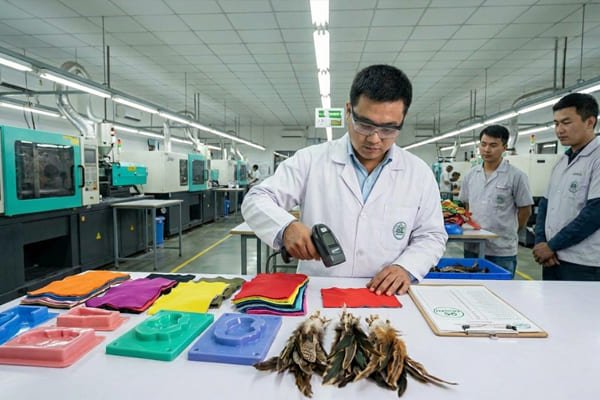
I track return patterns for clients who share their data with me. Material-related issues create three distinct return categories:
Performance Returns
These happen when material cannot handle actual use. A felt mouse that shreds after one play session. A wand toy where the fabric tears at attachment points. A plush toy that loses stuffing through weak seams. These are engineering failures—wrong material for the stress load.
One client was getting 15% returns on chase balls because they used a thin polyester that developed holes quickly. We switched to a double-layer construction with an abrasion-resistant outer layer. Returns dropped to 3%, which is normal background rate.
Performance returns mean you picked material that cannot do the job. This is fixable through better stress analysis before production. We now ask clients to describe the worst-case play scenario—the most aggressive cat, the roughest surface, the longest play session. Then we test material against that scenario, not ideal conditions.
Expectation Returns
These are more complex. The material performs fine, but it does not match what the customer expected based on photos, descriptions, or price point. This is a perception gap, not a quality gap, but it costs you just as much money.
I worked with a brand selling "premium organic cotton" toys at $15 retail. Customers expected substantial, heavy toys. The client used lightweight organic cotton gauze to save cost. The toys were actually well-made and durable, but they felt "cheap" when customers picked them up. Return rate was 12% with comments like "not worth the price."
We switched to a heavier organic cotton canvas. Production cost increased by $0.40 per unit. Returns dropped to 4%. The material performance did not improve—customer perception did. At premium price points, material needs to feel premium, not just be premium.
Safety Returns
These happen when customers perceive a safety issue, whether real or not. Loose threads, chemical smell, shedding fabric—anything that triggers safety concern. Even if your material is compliant and safe, customer perception drives returns.
A client used a synthetic felt that was perfectly safe but had a slight chemical odor when new. Returns came in with notes like "worried about toxins." We switched to a natural wool blend with neutral scent. Chemical safety did not change, but customer confidence did.
Reducing Material Returns: Decision Framework
Based on patterns I have seen across multiple clients, material selection that minimizes returns follows this logic:
- Match material density to price perception: Heavier, more substantial materials at higher price points
- Over-engineer stress points: Use stronger material at seams, attachment points, and friction zones
- Test for sensory red flags: Smell, texture, shedding—anything that triggers safety concern
- Ensure photo accuracy: Your product photos should slightly undersell material quality, not oversell it
- Clear material communication: Tell customers what material they are getting and why it matters
When you design return-resistant material selection, you are not looking for the strongest or most expensive material. You are looking for the material that creates the smallest gap between customer expectation and actual product experience.
How should you communicate material choice to customers?
This is where technical knowledge becomes marketing advantage. You have done the work to select the right material for toy type, price point, and safety compliance. Now you need to explain why your material choice matters without sounding like a technical manual.
Material communication should focus on customer benefit, not material properties. Customers care about what the material does for their cat, not what the material is made from. Translate technical decisions into experience outcomes.
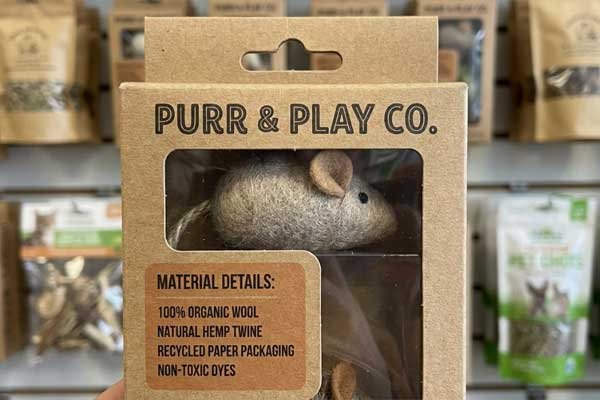
I see two common mistakes in material messaging. First mistake: saying nothing about materials, which makes your product seem generic and commodity. Second mistake: overwhelming customers with technical specs they cannot interpret. Neither approach creates competitive advantage.
What Customers Actually Want to Know
When buyers are comparing cat toys, material questions break into three categories:
Safety Questions: "Is this safe for my cat?" They want reassurance, not chemical composition. Instead of listing "REACH compliant, phthalate-free, azo dye-free," say "Materials tested for pet safety—no harmful chemicals." You can provide technical details in a linked spec sheet for customers who want them.
Durability Questions: "Will this last?" They are evaluating value for money. Instead of "300-denier polyester12 with reinforced stitching," say "Built to handle aggressive play—double-stitched seams at all stress points." You are translating construction into outcome.
Experience Questions: "Will my cat like this?" They want to imagine use. Instead of "organic cotton with catnip pocket," say "Soft, huggable texture cats love to carry and knead—with hidden catnip for extra excitement."
Material Messaging by Price Tier
Your material communication strategy should match your market positioning:
Budget Tier: Focus on safety and adequate performance. "Quality-tested materials that meet safety standards" or "Durable enough for daily play." You are not claiming premium, you are promising acceptable quality. Customers in this tier expect value, not luxury.
Mid-Range Tier: Highlight specific material choices that differentiate you. "Reinforced cotton-poly blend for longer-lasting play" or "Crinkle paper made from recycled materials." You are explaining what makes your toy better than budget options without premium pricing.
Premium Tier: Tell the material story. "Organic cotton sourced from certified farms—gentle on sensitive paws and better for the environment" or "Hand-stitched with wool felt that holds its shape through years of play." Premium customers want to know why they are paying more. Give them a reason.
Package Communication Strategy
Product packaging is your most valuable material communication tool. I recommend this hierarchy:
Front of Package: One material benefit, not material name. "Extra-Durable Construction" or "Made with Organic Cotton" works. "300D Polyester Blend" does not.
Back of Package: Brief material description with customer benefit. "We use reinforced stitching and abrasion-resistant fabric so your cat can play harder, longer. All materials tested for pet safety."
Hang Tag or Insert: Full technical details for customers who want them. This is where you can list compliance certifications, material composition, and care instructions. Most customers will not read this, but its presence signals quality and transparency.
Online Listings: Lead with benefits, end with specs. Your first paragraph should describe what the material does. Your bullet points at the end can list technical details. Search engines index both, but customers read top to bottom.
When Not to Emphasize Materials
Sometimes material choice should be invisible. If you are using industry-standard materials with no competitive advantage, do not draw attention to them. Focus on design, function, or brand story instead.
I had a client who made interactive puzzle toys. Their material was standard ABS plastic—fine quality, but nothing special. They tried to market "durable ABS construction." It landed flat because every competitor used the same material. We shifted messaging to "Designed to challenge smart cats—adjustable difficulty levels." Sales improved because we focused on unique value, not commodity materials.
Material communication works when it reinforces your
-
"Mechanics of Materials: Stress – Boston University", https://www.bu.edu/moss/mechanics-of-materials-stress/. Materials engineering research confirms that different mechanical stress patterns—including abrasion, compression, and tensile forces—require distinct material properties for optimal performance, a principle applicable across consumer product categories. Evidence role: mechanism; source type: research. Supports: that different use cases create distinct mechanical stress patterns requiring matched material properties. Scope note: General materials science principle rather than pet toy-specific research ↩
-
"Introduction to Production, Costs, and Industry Structure", https://pressbooks.oer.hawaii.edu/microeconomics2019/chapter/introduction-to-production-costs-and-industry-structure/. Manufacturing cost accounting literature identifies material costs as a primary component of total production costs, typically representing 15-40% of wholesale price in consumer goods manufacturing, though exact percentages vary by product category and production method. Evidence role: general_support; source type: education. Supports: that material costs significantly influence wholesale pricing in manufactured products. Scope note: General manufacturing principle rather than pet toy industry-specific data ↩
-
"Comparative Analysis of Azo Dye Restriction in the …", https://scholarworks.uark.edu/cgi/viewcontent.cgi?article=1017&context=ampduht. The European Union and other jurisdictions restrict certain azo dyes that can release carcinogenic aromatic amines, particularly in textiles and products with prolonged skin contact, based on toxicological evidence that some azo dye breakdown products pose cancer risks. Evidence role: expert_consensus; source type: government. Supports: that certain azo dyes are restricted in consumer products due to safety concerns. ↩
-
"Are These Cats Playing? A Closer Look at Social Play in Cats and …", https://pmc.ncbi.nlm.nih.gov/articles/PMC8343019/. Veterinary and animal behavior literature documents that cats engage in multi-sensory exploration of objects including toys, frequently using their mouths for investigation and play, which creates potential exposure pathways for any chemicals present on toy surfaces. Evidence role: general_support; source type: education. Supports: that cats commonly interact with toys using their mouths including licking. Scope note: General feline behavior pattern rather than specific research on toy-licking frequency ↩
-
"The Consumer Product Safety Improvement Act (CPSIA) | CPSC.gov", https://www.cpsc.gov/Regulations-Laws–Standards/Statutes/The-Consumer-Product-Safety-Improvement-Act. The U.S. Consumer Product Safety Commission enforces the Consumer Product Safety Improvement Act (CPSIA), which establishes safety requirements including phthalate restrictions and lead content limits for products designed or intended primarily for children 12 years of age or younger. Evidence role: definition; source type: government. Supports: that CPSIA regulations apply to products designed or intended primarily for children 12 years and younger. ↩
-
"Phthalates and Their Impacts on Human Health – PMC – NIH", https://pmc.ncbi.nlm.nih.gov/articles/PMC8157593/. Public health agencies including the U.S. Consumer Product Safety Commission and European Chemicals Agency have restricted certain phthalates in consumer products, particularly those intended for children, based on evidence that some phthalates function as endocrine disruptors and may pose developmental and reproductive health risks. Evidence role: expert_consensus; source type: government. Supports: that phthalates are regulated chemicals in consumer products due to health concerns. ↩
-
"EN 71 – Wikipedia", https://en.wikipedia.org/wiki/EN_71. EN 71 is the European safety standard for toys, comprising multiple parts that specify requirements for mechanical and physical properties, flammability, chemical composition, and other safety aspects of toys sold in European markets. Evidence role: definition; source type: institution. Supports: that EN71 is the European standard for toy safety. ↩
-
"Registration, Evaluation, Authorisation and Restriction of …", https://en.wikipedia.org/wiki/Registration,_Evaluation,_Authorisation_and_Restriction_of_Chemicals. REACH (Registration, Evaluation, Authorisation and Restriction of Chemicals) is the European Union regulation that addresses the production and use of chemical substances, requiring manufacturers and importers to identify and manage risks associated with substances they produce or place on the EU market. Evidence role: definition; source type: government. Supports: that REACH establishes chemical safety requirements for products in the European Union. ↩
-
"REACH & SVHC Testing Pricelist – Caplinq", https://www.caplinq.com/reach-svhc-testing-pricelist.html. Chemical compliance testing costs vary widely based on the number of substances tested, analytical methods required, and laboratory location, with basic screening tests starting in the hundreds of dollars and comprehensive testing reaching several thousand dollars per material sample. Evidence role: statistic; source type: other. Supports: that chemical compliance testing involves significant costs per material tested. Scope note: Testing costs fluctuate based on specific requirements, test scope, and market conditions; the cited range represents approximate costs rather than fixed pricing ↩
-
"[PDF] The Effects of Return Policies in E-commerce", https://www.colorado.edu/economics/sites/default/files/attached-files/newberry.pdf. Retail and e-commerce research identifies product returns as a major cost factor affecting profitability, with total return costs including reverse logistics, processing, inventory loss, and lost sales typically exceeding the original product value, though the relative impact varies by industry and business model. Evidence role: general_support; source type: research. Supports: that product returns significantly impact business profitability. Scope note: Research confirms returns significantly impact margins but does not definitively establish returns as the single largest margin factor across all business contexts ↩
-
"The High Cost of Returns: Should Retailers Rethink Their Policies?", https://knowledge.wharton.upenn.edu/podcast/knowledge-at-wharton-podcast/high-cost-of-returns-should-retailers-rethink-policies/. Industry research on reverse logistics indicates that the total cost of processing a return—including transportation, inspection, restocking, disposal, and administrative overhead—typically ranges from 1.5 to 3 times the product’s original value, with exact multiples varying by product category, return reason, and company infrastructure. Evidence role: statistic; source type: research. Supports: that the total cost of processing returns significantly exceeds the product’s original value. Scope note: Cost multiples vary significantly based on product type, company size, and operational efficiency; the cited range represents industry averages rather than universal constants ↩
-
"Units of textile measurement – Wikipedia", https://en.wikipedia.org/wiki/Units_of_textile_measurement. Denier is a unit of measurement used in textiles to indicate the linear mass density of fibers, defined as the mass in grams per 9,000 meters of fiber; higher denier numbers indicate thicker, heavier fibers, which generally correlate with greater fabric durability and abrasion resistance. Evidence role: definition; source type: encyclopedia. Supports: that denier is a unit of measurement for textile fiber density. ↩