
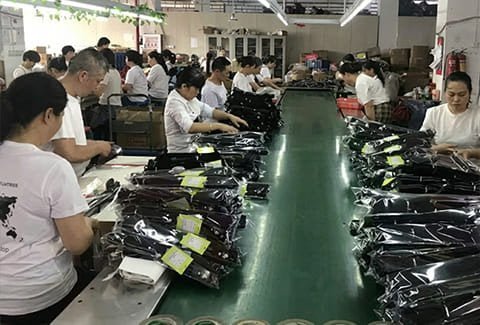
You’ve compared quotes from three factories. The prices look reasonable. The product samples seem fine. You’re ready to place your first bulk order for pet carriers—until your supplier mentions a $1,200 mold fee you never saw coming, or tells you the 500-unit order you thought was confirmed actually doesn’t meet their minimum production requirement.
Most sourcing failures in bulk pet supplies don’t happen because you chose the wrong factory. They happen because the cost structures, production constraints, and timeline realities that determine whether your order succeeds remain invisible until you’re already committed. By the time you discover these pitfalls, you’ve often spent weeks negotiating, paid deposits, or locked yourself into a production schedule that no longer works for your launch date.
I handle inquiries and production planning for overseas buyers every week—Amazon sellers building private label lines, established brands expanding product categories, and first-time entrepreneurs ordering their first containers. The buyers who avoid costly surprises aren’t necessarily the ones with the biggest budgets. They’re the ones who understand the operational mechanics behind factory quotes before they commit.
Let me show you the 3 pitfalls I see trip up bulk buyers most often, and more importantly, the production-side realities that cause them.
Why Do Factories Set High MOQs When They Could Just Accept Smaller Orders?
When you see "MOQ: 500 units" on a quote and ask if the factory can do 100 instead, you’re not encountering arbitrary sales policy. You’re running into production-line economics that most factories don’t explain clearly.
Minimum Order Quantities exist because production lines have fixed setup costs that must be recovered across the units in your order. For soft-structure pet products like carriers, beds, or harnesses, setup includes: cutting pattern templates, configuring sewing machines for specific seam types, issuing fabric rolls to cutting tables, and briefing the production team on your specifications. These setup activities cost the same whether we’re making 50 units or 5001.
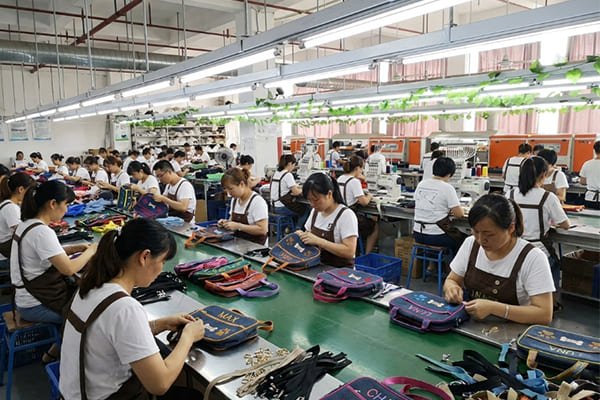
Here’s the operational reality: our sewing lines run in shifts. Each shift handles one product type to maintain quality consistency and minimize errors2. When we accept a 500-unit pet carrier order, we dedicate one shift (roughly 8 hours) to your product. The workers learn the assembly sequence, the quality inspector knows which stress points to check, and material waste from cutting patterns gets distributed across enough units to keep fabric utilization above 85%3.
What Happens When Order Volume Falls Below Production Efficiency Threshold
If we accept a 50-unit order for the same carrier, the setup costs don’t shrink. We still configure machines, cut patterns, and brief the team—but now those fixed costs get divided across only 50 units instead of 500. The per-unit labor cost jumps by 40-60%4. Fabric waste percentage increases because we can’t optimize cutting layouts for small quantities. And we lose the shift’s productive capacity, because finishing 50 units takes only 2-3 hours, leaving the line idle or forcing us to switch to another product mid-shift (which creates new setup costs).
This is why factories quote higher per-unit prices for orders below MOQ, or refuse small orders entirely during peak season. It’s not about unwillingness to work with you. It’s about whether your order can cover the non-negotiable costs of engaging a production line.
Before you negotiate MOQ down, ask yourself: Can you commit to follow-up orders that would let the factory amortize setup costs across a longer relationship? Some manufacturers (including us) accept below-MOQ trial orders if you’re planning a 2,000-unit reorder after validation—because the first batch becomes setup for the second. But if you’re testing five products with five factories at 50 units each, expect either high per-unit prices or factories that will deprioritize your timeline.
How to Evaluate if a Factory’s MOQ Actually Matches Your Business Model
- Calculate your inventory risk: Multiply MOQ by per-unit cost, add shipping and storage. Can you afford that capital tied up for 3-6 months?
- Check your sales velocity: If you’re selling 20 units/month, a 500-unit MOQ is 25 months of inventory—your product trend may die before you sell through.
- Ask about MOQ flexibility windows: Some factories lower MOQ during slow seasons (January-March in China) when production lines need orders.
- Consider product consolidation: Ordering 500 units across three colorways of the same base product often meets MOQ better than ordering three completely different items.
| Order Volume | Typical Setup Cost Recovery | Per-Unit Cost Impact | Factory Priority Level |
|---|---|---|---|
| 50-200 units | Setup cost exceeds profit margin | +40-60% vs standard price | Low (likely delayed) |
| 300-500 units | Setup cost breaks even | +15-25% vs standard price | Medium |
| 500-1000 units | Setup cost absorbed | Standard pricing | High |
| 1000+ units | Setup negligible per unit | Volume discount possible | Highest priority |
The factories that won’t negotiate below 500 units aren’t being difficult. They’re telling you their production model doesn’t support small-batch economics. Respect that boundary and find a supplier whose capacity model matches your order volume—or adjust your volume to match production realities.
Why Does the Final Invoice Always Exceed the Quoted Unit Price?
You received a quote: "$8.50 per pet carrier, FOB Qingdao5." You ordered 1,000 units. You expected to pay $8,500. Then the final invoice shows $11,200, and you’re scrambling to understand where the extra $2,700 came from.
Unit price visibility is the most deceptive metric in bulk sourcing because it isolates product cost from all the other required expenditures that turn raw materials into shippable inventory. Sampling fees, mold or pattern development costs, compliance testing, quality inspection, and logistics surcharges are not optional extras—they’re structural requirements for getting your product made correctly and delivered legally.
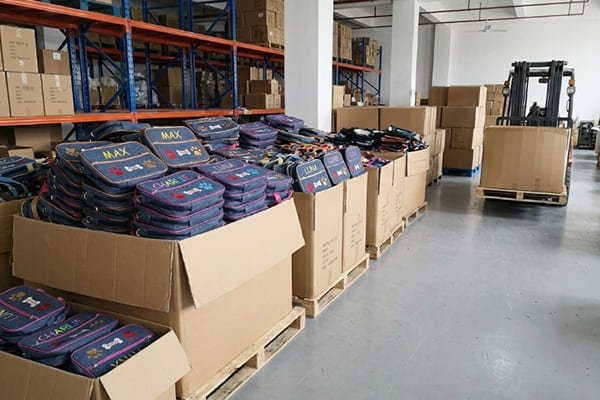
When I send quotes to buyers, I include unit price prominently because that’s what people compare first. But below that line, there’s a cost structure most buyers skim over until payment time:
The Complete Cost Structure Most Quotes Don’t Surface Clearly
1. Sampling and development fees ($200-800):
Before production starts, you need physical samples to approve design, material quality, and construction. For custom pet carriers, we typically produce 2-3 prototype samples with different fabric combinations or structural adjustments based on your feedback. Each sample costs $50-150 to produce (full labor, materials, and shipping as if it were a single retail unit). If you request significant design changes after the first sample, that’s another round of pattern adjustment and sewing time.
2. Mold or pattern development ($300-1,500):
Soft-structure pet products like beds or plush toys require cutting patterns—templates that guide fabric cutting for consistent sizing. Hard-structure components (plastic buckles, zippers, rigid carrier frames) often require injection molds. Even if you’re ordering a "standard" carrier, customizing dimensions, adding pockets, or changing structural reinforcement means adjusting or creating new patterns. This is a one-time cost, but it must be paid before production starts.
3. Compliance testing ($400-2,000 per product):
If you’re selling pet supplies in the US or EU, your products need to meet specific safety standards—lead content testing for metal components, flammability testing for fabrics, tensile strength testing for leashes and harnesses6. These tests happen at third-party labs (SGS, TÜV, Intertek) and cost $400-2,000 depending on product complexity7 and target market regulations. You pay this cost once per product design, but if you modify materials or construction later, you’ll need retesting.
4. Quality inspection fees ($200-500):
Third-party inspection (or your own QC visit) before shipment is standard practice for bulk orders. Inspection companies charge $200-500 per visit to verify your order matches specifications, check for defects, and document pre-shipment condition. Skipping this to save $300 risks receiving 1,000 units with stitching flaws or incorrect sizing that cost you $8,500.
5. Logistics surcharges (10-25% of product cost):
FOB pricing means you’re responsible for ocean freight, customs clearance, and delivery to your warehouse. But even before that, there are local logistics costs: factory-to-port trucking, export documentation, fumigation (if shipping wood components)8, and container loading. These often add $800-1,500 to the factory’s final invoice.
Per-unit price only reflects the marginal cost of producing one more unit after all setup is complete. It does not reflect the fixed costs required to initiate production, validate quality, and prepare your order for shipment.
How to Get Complete Cost Visibility Before Committing
When you request a quote, ask for a total project cost breakdown, not just unit pricing. Specifically:
- "What are the sampling fees, and how many revision rounds are included?"
- "Are there any mold or pattern development costs for this product?"
- "What compliance testing is required for my target market, and who covers the lab fees?"
- "What are the inspection and pre-shipment logistics costs?"
- "Does your quote include inland shipping to the port, or do I pay that separately?"
If a factory only provides unit price and refuses to itemize other costs, that’s a red flag. Either they’re inexperienced with export orders, or they’re intentionally hiding costs to win your business with a low initial quote, then surprising you with "mandatory" fees later.
I always send a two-page quote: page one has unit price, MOQ, and lead time. Page two lists every additional cost the buyer will encounter from sample approval to container loading. Some buyers choose us despite slightly higher unit prices because they can budget accurately from the start. Others choose cheaper quotes, then contact us three weeks later asking if we can rescue orders that spiraled beyond budget.
Why Can’t the Factory Just Design the Product for Me?
You’ve found a manufacturer. You know you want a pet carrier, roughly medium-sized, with good ventilation. You assume the factory will handle design details—after all, they make hundreds of carriers. Then the factory asks for a technical drawing, material specifications, and reference samples, and you realize you’re expected to provide information you don’t have.
OEM factories execute specifications; they don’t create products from vague concepts. When you hire a contract manufacturer, you’re purchasing production capacity and technical execution, not product development services. The factory’s expertise lies in translating your design into manufacturable construction, sourcing the correct materials, and maintaining quality consistency across hundreds or thousands of units—not in inventing what your product should look like or how it should function.

This expectation gap creates the longest delays I see in new buyer projects. Someone contacts us saying, "I want to make a premium dog carrier for airline travel." That’s a product category, not a product specification. To start production, I need:
What "Design Information" Actually Means in Factory Terms
1. Dimensional specifications:
- External dimensions (length × width × height in centimeters)
- Internal usable space
- Weight capacity
- Collapsed/folded dimensions if applicable
2. Material callouts:
- Exterior fabric type (600D polyester? Waterproof oxford? Canvas?)
- Interior lining material
- Frame structure (steel wire? Plastic rods? Collapsible aluminum?)
- Hardware specifications (YKK zippers9? Plastic buckles? Metal D-rings?)
3. Functional features:
- Ventilation panel placement and mesh type
- Entry points (top-loading? Side-access? Both?)
- Storage pockets (quantity, size, placement)
- Shoulder strap design (adjustable? Padded? Removable?)
- Compliance requirements (airline-approved dimensions? Crash-tested?)
4. Visual references:
- Photos of competitor products you want to match or differentiate from
- Sketches of unique features
- Color swatches or Pantone codes for branding elements
If you provide all this information upfront, we can send you a detailed quote and production timeline within 48 hours. If you send "I want something like this Amazon link," we have to reverse-engineer the competitor’s product through photos (which takes 5-7 days), guess at your material preferences, and then wait for your feedback on whether our assumptions match your vision. That back-and-forth can stretch sample development to 4-6 weeks.
The Difference Between OEM, ODM, and Full Product Development
Understanding these terms helps you find the right manufacturing partner:
-
OEM (Original Equipment Manufacturer)10: You provide complete designs and specifications; the factory produces exactly what you specify. Fastest and cheapest, but requires you to have design-ready files.
-
ODM (Original Design Manufacturer): The factory has existing product designs you can customize (change colors, add your logo, modify dimensions slightly). Faster than creating from scratch, but less unique.
-
Full Product Development: The factory acts as your R&D team, developing products from concept. Very few pure manufacturers offer this—you typically need an agency or design firm first, then take finished specs to a factory.
Most pet supplies factories (including us) operate in OEM and ODM modes. We have standard carrier, harness, and bed designs you can customize. If you want something completely original, we can execute it—but you need to bring the design concept, or hire a product designer before contacting manufacturers.
How to Prepare Design Information Even If You’re Not a Designer
You don’t need AutoCAD skills to give a factory usable specifications. Here’s what works:
Use competitor products as templates:
Buy 2-3 competing products that are close to your vision. Measure them. Photograph them from every angle. Note what you like and what you’d change. Send these to the factory with annotations: "Same size as Product A, but use waterproof fabric like Product B, and add a side pocket like Product C." This gives us a concrete starting point.
Create a simple specification document:
Open a Google Doc or Excel sheet. List every feature you want, with measurements or examples. Include:
- Must-have features (non-negotiable)
- Nice-to-have features (if cost allows)
- Features you explicitly don’t want
Provide visual mood boards:
If you’re building a premium brand, show us the aesthetic you’re targeting. Send Pinterest boards, competitor websites, or color palettes. Visual references prevent mismatches between your brand positioning and the factory’s interpretation of "premium."
Ask for ODM catalog first:
Request the factory’s existing product designs before trying to create something custom. You might find a base model that’s 80% of what you want—then you only need to customize the remaining 20%, which saves weeks of development time and hundreds of dollars in sampling.
The factories that get frustrated with "design it for me" requests aren’t being unhelpful. They’re trying to communicate that efficient manufacturing starts with clear instructions. Give us a detailed specification, and we’ll execute it flawlessly. Give us a vague concept, and we’ll spend weeks guessing at your expectations—while you wait for samples that still miss the mark.
-
"Economies of scale", https://en.wikipedia.org/wiki/Economies_of_scale. Manufacturing economics research confirms that setup activities—including machine configuration, pattern preparation, and workforce briefing—represent fixed costs that do not scale proportionally with batch size, creating per-unit cost penalties for small production runs. Evidence role: general_support; source type: research. Supports: Fixed setup costs in batch production remain constant regardless of order volume. Scope note: General manufacturing principle; specific percentages may vary by product category and facility ↩
-
"How to Reduce Changeover Time in Manufacturing Processes", https://www.firstresonance.io/blog/how-to-reduce-changeover-time-in-manufacturing. Manufacturing quality research indicates that minimizing production line changeovers—by dedicating shifts or production periods to single product types—reduces defect rates by allowing workers to develop procedural memory for specific assembly sequences and enabling quality inspectors to focus on product-specific failure modes. Evidence role: mechanism; source type: research. Supports: Dedicated production runs improve quality outcomes. Scope note: Quality improvement magnitude depends on product complexity and workforce training level ↩
-
"Optimizing Fabric Utilization in Garment Manufacturing", https://dineshexports.com/garment-manufacturing/. Textile manufacturing efficiency studies identify fabric utilization rates—the percentage of material converted into finished product components versus waste—with industry benchmarks typically ranging from 75% to 90% depending on product geometry, with 85% representing a common target for efficient operations in cut-and-sew production. Evidence role: statistic; source type: research. Supports: Fabric utilization efficiency benchmarks in textile product manufacturing. Scope note: Utilization rates vary significantly by product category, fabric width, pattern complexity, and cutting technology ↩
-
"Productive efficiency", https://en.wikipedia.org/wiki/Productive_efficiency. Manufacturing operations research demonstrates that per-unit labor costs increase substantially—often by 40% or more—when batch sizes fall below the economic production quantity, as fixed labor components including setup time, supervision, and quality control are distributed across fewer units. Evidence role: statistic; source type: research. Supports: Per-unit labor cost increases when production volume decreases below economic batch quantity. Scope note: Specific percentage increase varies by industry, product complexity, and facility automation level ↩
-
"Know Your Incoterms", https://www.trade.gov/know-your-incoterms. The International Chamber of Commerce’s Incoterms standards define Free On Board (FOB) as a trade term indicating that the seller fulfills delivery obligations when goods pass the ship’s rail at the named port of shipment, after which point the buyer assumes all costs and risks—a widely used term in ocean freight transactions. Evidence role: definition; source type: institution. Supports: Definition of FOB (Free On Board) in international trade terms. ↩
-
"Toy Safety Business Guidance | CPSC.gov", https://www.cpsc.gov/Business–Manufacturing/Business-Education/Toy-Safety. Consumer product safety regulations in the United States and European Union establish testing requirements for pet supplies, including restrictions on hazardous substances in components that contact animals, flammability standards for textile materials, and structural integrity requirements for restraint products. Evidence role: general_support; source type: government. Supports: Safety testing requirements for pet products in major markets. Scope note: Specific testing protocols vary by product category, intended use, and target market jurisdiction ↩
-
"General Use Products: Certification and Testing | CPSC.gov", https://www.cpsc.gov/Business–Manufacturing/Testing-Certification/General-Use-Products-Certification-and-Testing. International testing and certification organizations publish fee schedules indicating that compliance testing for consumer products, including textiles and pet supplies, typically ranges from several hundred to several thousand dollars per product submission, depending on the number of tests required, material complexity, and regulatory scope. Evidence role: statistic; source type: institution. Supports: Third-party testing laboratory fee structures. Scope note: Actual costs vary by laboratory, geographic region, test combination, and turnaround time requirements ↩
-
"Regulation of wood packaging material in international trade", https://www.ippc.int/static/media/files/publication/en/2019/02/ISPM_15_2018_En_WoodPackaging_Post-CPM13_Rev_Annex1and2_Fixed_2019-02-01.pdf. The International Plant Protection Convention’s ISPM 15 standard, adopted by most trading nations, requires wood packaging materials and certain wood components in international shipments to undergo approved treatments such as heat treatment or fumigation to prevent the spread of wood-boring insects and plant diseases. Evidence role: general_support; source type: institution. Supports: International phytosanitary standards for wood in trade. Scope note: Specific requirements vary by origin and destination country, wood species, and product classification ↩
-
"YKK", https://en.wikipedia.org/wiki/YKK. YKK Corporation holds a dominant position in the global zipper and fastener market, making its products a common specification reference in manufacturing documentation across apparel, luggage, and pet product categories, though the company name in this context serves as an example of component-level specification detail rather than an endorsement. Evidence role: case_reference; source type: institution. Supports: YKK as a representative fastener component manufacturer. Scope note: Used here as an illustrative example of hardware specification; other fastener manufacturers also meet quality standards ↩
-
"Original equipment manufacturer", https://en.wikipedia.org/wiki/Original_equipment_manufacturer. In manufacturing terminology, Original Equipment Manufacturer (OEM) refers to a company that produces goods based on designs and specifications provided by another company, which then markets the products under its own brand—a production arrangement common in industries ranging from electronics to consumer goods. Evidence role: definition; source type: encyclopedia. Supports: Definition of Original Equipment Manufacturer in production context. ↩