
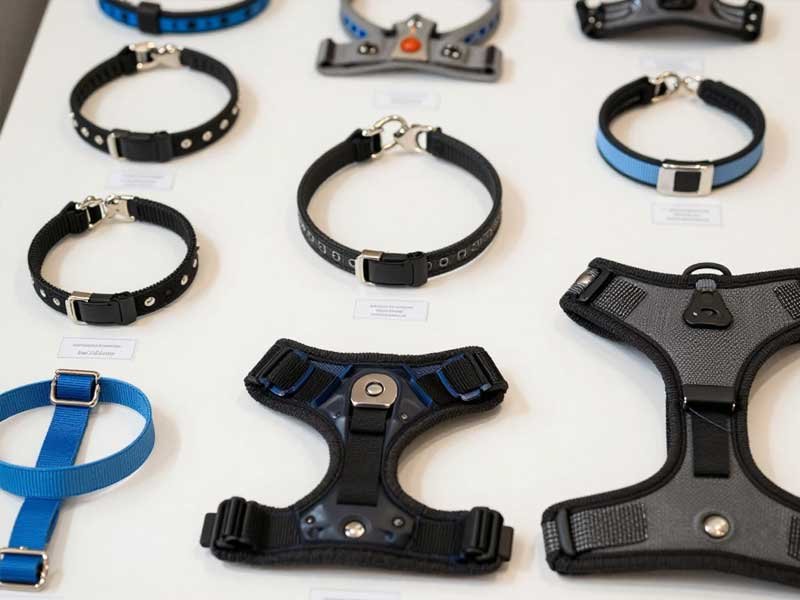
When evaluating top features in pet gear, most private-label buyers start in the wrong place. They fixate on color palettes, trendy patterns, and listing photos — then wonder why return rates climb and reviews mention broken buckles or overheated dogs1. The real feature evaluation starts much earlier: at the material and structure level, where sourcing decisions are made.
The top features buyers should look for in pet gear are not cosmetic — they are structural and functional. Hardware durability, breathability of core fabrics, load-bearing stitch patterns, and washability matter far more than color options or logo placement. Buyers who evaluate features through a manufacturing and real-use lens build product lines that survive actual pet ownership, reduce returns, and genuinely differentiate on the shelf.
I’ve spent over a decade fielding product briefs from private-label startups, Amazon sellers, and distributors across dozens of countries. A clear pattern emerges: the gap between what buyers think matters and what actually drives product performance is wide — and expensive. Let me walk you through the features that consistently separate successful pet gear from forgettable commodity.
Why Do Most Buyers Over-Index on Appearance When Sourcing Pet Gear?
It’s the most common mistake I see in initial buyer briefs. A new private-label entrepreneur sends over a mood board full of colors, prints, and lifestyle photography — but the brief says almost nothing about hardware grade, fabric weight, or structural reinforcement. The product looks great in a flat-lay photo. Then it fails in the field.
The reason buyers over-index on appearance is simple: they evaluate pet gear the way consumers scroll — visually. But a sourcing decision is not a purchase decision. What photographs well and what performs well are two different problems, and conflating them is the number-one blind spot that leads to returns, bad reviews, and a product line that can’t compete on substance.
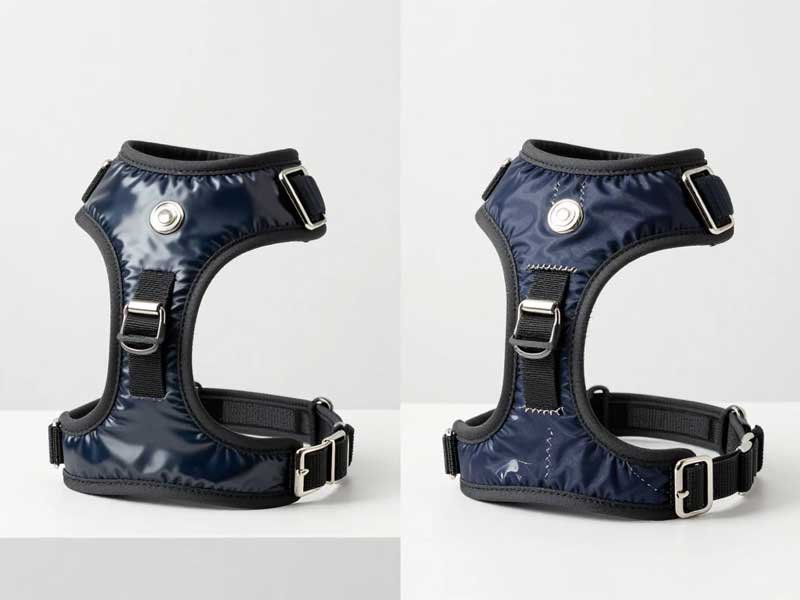
The Visual Trap in Product Briefs
When a buyer sends us a product brief, roughly seven out of ten initial requests prioritize aesthetics2 — specific Pantone colors, custom prints, packaging design. These aren’t unimportant. But they arrive before any discussion of:
- Hardware specification — Are the D-rings zinc alloy or stamped steel3? What load rating do the buckles need?
- Fabric breathability — Is the mesh single-layer or double-layer? What’s the air permeability for a carrier used in summer?
- Stitch reinforcement — Are stress points bar-tacked or just straight-stitched4?
- Washability — Will the fabric and fill hold up after 20+ machine washes?
These are the features that determine whether a product survives real use by real pets and their owners. A beautiful harness with a plastic buckle that snaps during a strong-dog lunge is a one-star review waiting to happen, no matter how photogenic it was.
What This Costs You
The cost of the visual trap isn’t just returns. It’s opportunity cost in differentiation. If your competitor’s harness looks similar but uses a reinforced nylon webbing with a tested aluminum buckle, their repeat purchase rate climbs while yours stalls. You spent your development budget on a custom print. They spent theirs on a structural upgrade that customers can feel the moment they clip it on.
| Feature Category | Typical Buyer Priority | Actual Impact on Returns/Reviews |
|---|---|---|
| Color/Pattern | Very High | Low |
| Logo/Branding | High | Low |
| Hardware Grade | Low | Very High |
| Fabric Breathability | Medium | High |
| Stitch Reinforcement | Low | Very High |
| Washability | Low | High |
I’m not saying appearance doesn’t matter. It gets the click. But the structure gets the five-star review, and the five-star review is what compounds your business.
What Functional Features Actually Reduce Returns in Pet Gear?
Returns are the silent killer of private-label pet gear margins. And the features that reduce returns are almost never the ones buyers prioritize during initial product selection. The pattern I consistently see: buyers who invest in functional, use-case-driven features up front spend less on customer service and replacement shipments down the line.
The functional features that most reduce returns in pet gear are hardware durability under load, breathability matched to climate use, dimensional stability after washing, and intuitive adjustability. These are manufacturing decisions — they’re locked in at the spec stage, not the listing stage — and they directly correlate with whether a product survives its first month of real ownership.
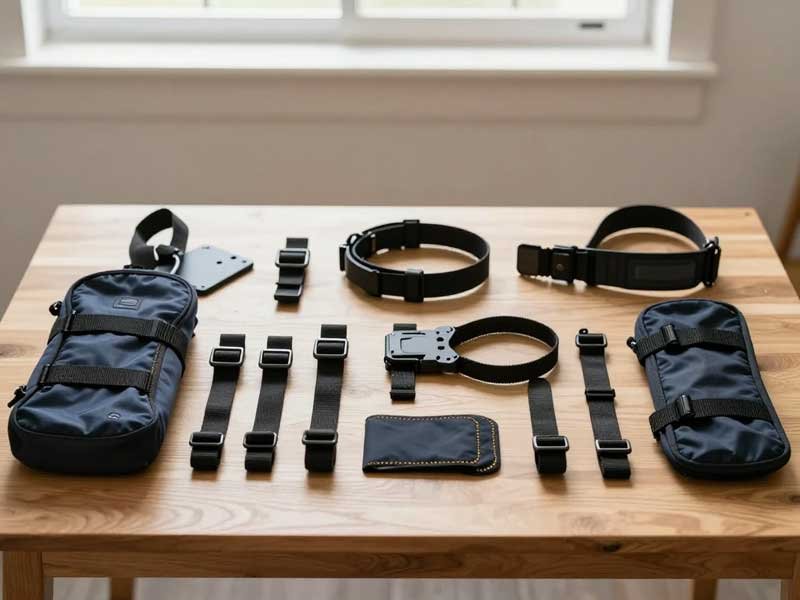
Hardware Durability Under Load
This is the single most under-specified feature in buyer briefs. A leash or harness looks complete in a photo regardless of whether its buckle is injection-molded plastic or die-cast zinc alloy. But in use, the difference is dramatic.
When buyers brief us on harnesses or travel gear, I always push them to define the target dog weight range first — because that determines hardware grade:
- Small dogs (under 10 kg): Lightweight plastic buckles can work, but even here, reinforced nylon or POM (polyoxymethylene) buckles outperform cheap ABS5.
- Medium dogs (10–25 kg): Zinc alloy buckles and welded D-rings become essential. Stamped or folded D-rings can deform under sustained pulling.
- Large dogs (25 kg+): Aluminum alloy or stainless steel hardware, bar-tacked webbing, and reinforced attachment points aren’t premium upsells — they’re minimum requirements.
The incremental cost difference between cheap and adequate hardware is often less than $0.30–$0.80 per unit6 at production scale. The cost of a single return — including shipping, replacement, and review damage — dwarfs that.
Breathability and Climate-Appropriate Materials
I see this most often with pet carriers and beds. A buyer selects a fabric because it looks and feels plush in a hand sample. Then end consumers use it in a warm climate, and the pet overheats or the fabric traps moisture and develops odor.
Breathability is a material-and-structure decision, not a finishing touch. It involves:
- Mesh panel placement and density in carriers
- Air-permeable core fills versus solid foam in beds
- Moisture-wicking fabric treatments for apparel
When you’re sourcing pet gear, ask your manufacturer about air permeability ratings7 for fabrics and whether the product design includes ventilation zones. This is a top feature that rarely appears in listing photos but shows up immediately in customer experience.
Dimensional Stability After Washing
Pet products get dirty. Buyers often don’t think about post-wash performance until reviews start mentioning "shrunk after first wash" or "fill clumped up." The feature to evaluate here is:
- Fabric pre-shrinkage treatment — Was the textile pre-shrunk before cutting?
- Fill type — Hollow-fiber polyester holds shape better than low-grade recycled fill after washing8.
- Construction method — Quilted compartments in beds prevent fill migration9; single-cavity designs almost always clump.
These are questions to ask at the sampling stage, not after your first production run ships.
Does Private-Label Branding Actually Create Differentiation in Pet Gear?
This is a question I find myself discussing with buyers almost weekly. Many first-time private-label sellers equate "putting my logo on it" with "building a differentiated product." The hard truth: a logo swap on a generic product is not differentiation — it’s decoration.
Real differentiation in private-label pet gear comes from material and structural customization, not branding alone. A custom logo on a commodity harness competes on price. A harness with a proprietary padding structure, a specific hardware grade, or a unique size-adjustment system competes on value. The features buyers should invest in are the ones competitors can’t replicate with a different tag.
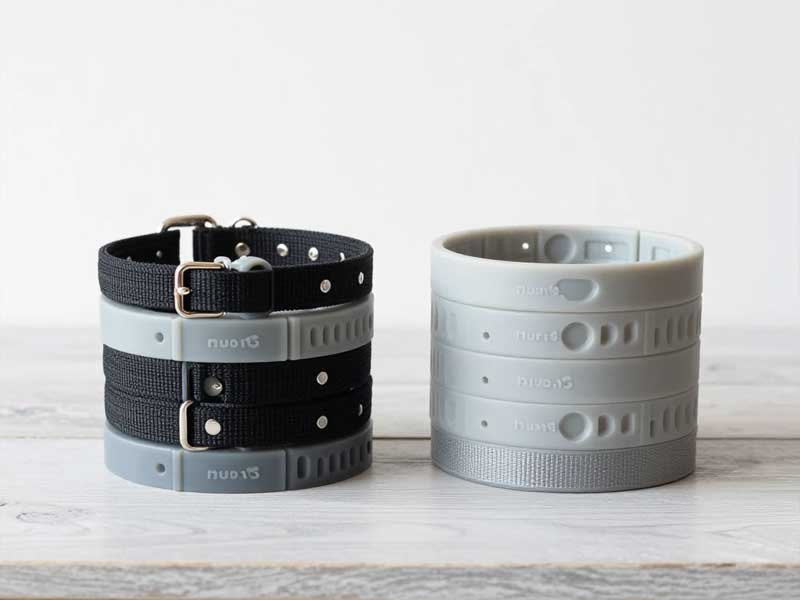
The Logo-Swap Trap
Here’s the pattern: a buyer finds a popular-looking pet carrier on a competitor’s listing, sources something visually similar from a catalog, adds their logo and packaging, and lists it. Within months, five other sellers do the same. The listing becomes a price war. Nobody wins except the cheapest option.
I call this catalog-clone branding, and it’s the default approach for sellers who haven’t engaged with what OEM/ODM development actually offers.
What Meaningful Customization Looks Like
When I work with buyers who go beyond logo placement, the conversation shifts to decisions like:
- Material substitution — Replacing standard polyester lining with a bamboo-fiber blend for antimicrobial properties10 and a distinct hand-feel.
- Structural modification — Adding a reinforced bottom panel to a pet carrier so it doesn’t sag, or redesigning a harness’s chest plate to distribute load differently.
- Hardware selection — Choosing a specific buckle type (e.g., magnetic closure vs. side-release) that changes the user experience.
- Size-system engineering — Developing a genuinely adjustable design that covers a wider size range, reducing the need for multiple SKUs.
These choices require working with a manufacturer at the development stage — not just the order stage. This is where OEM/ODM capability matters. It’s the difference between ordering from a menu and designing a recipe.
Cost-Realistic Feature Budgeting
Every structural improvement has a cost implication. Buyers need to translate their wishlist into a manufacturable, cost-realistic spec. This is the skill I see most directly correlating with product success:
| Customization Type | Typical Cost Impact (Per Unit) | Differentiation Value |
|---|---|---|
| Logo/tag swap only | $0.10–$0.30 | Very Low |
| Custom colorway/print | $0.20–$0.50 | Low–Medium |
| Material upgrade (fabric) | $0.50–$2.00 | Medium–High |
| Structural modification | $1.00–$5.00+ | High |
| Hardware grade upgrade | $0.30–$1.50 | High |
| Custom packaging | $0.30–$1.00 | Low–Medium |
The buyers who succeed long-term are the ones who allocate budget toward the middle and bottom of this table, not just the top two rows.
How Should Buyers Evaluate Pet Gear Features for Real-Use Performance?
This is where I see the biggest knowledge gap. A buyer reads "durable" or "breathable" in a product description and assumes it’s true. But without a framework for evaluating whether a feature holds up in actual use, they’re trusting marketing copy — often their own future marketing copy — instead of verifiable performance.
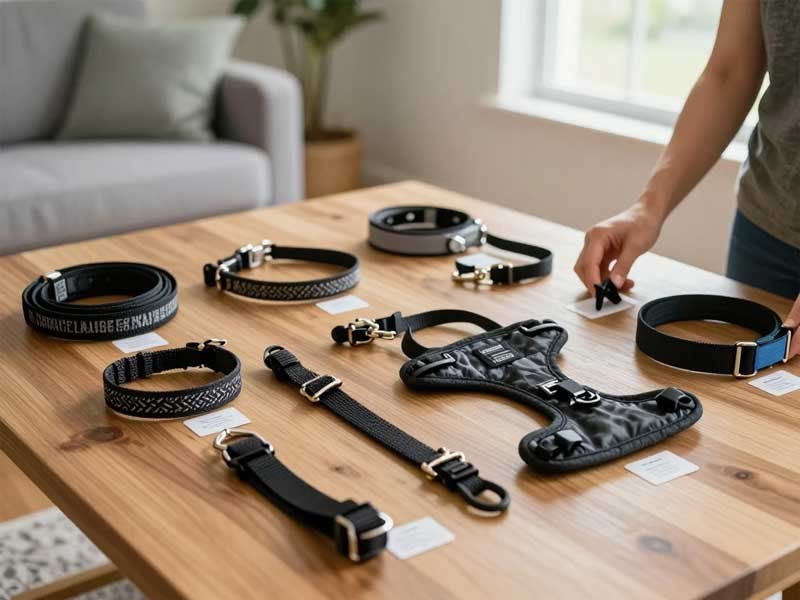
Buyers should evaluate pet gear features by testing against real-use scenarios, not listing claims. Request physical samples and subject them to simulated wear: wash them repeatedly, stress-test hardware by hand, check for sharp edges after assembly, and verify that adjustable components actually adjust across the claimed range. A feature only counts if it survives the conditions your end customer will create.
A Practical Evaluation Framework
When I advise buyers on evaluating samples, I suggest a simple four-step filter for every claimed feature:
-
Can you physically verify it? — If a fabric is described as "breathable," hold it to your mouth and blow. Feel the difference between open-weave mesh and dense polyester. If hardware is "heavy-duty," try to flex the D-ring with your hands.
-
Does it survive washing? — Run the sample through three full wash-and-dry cycles. Check for shrinkage, fill migration, color bleeding, and hardware corrosion. Many features degrade after a single wash.
-
Does it function across the claimed size range? — If a harness claims to fit 15–30 kg dogs, test it at both extremes. Adjustable straps that technically reach both ends but bunch awkwardly at one extreme are a usability failure.
-
Would a pet owner figure it out without instructions? — Intuitive design is a feature. If your carrier’s zipper routing is confusing or your harness’s step-in orientation isn’t obvious, that’s a return driver.
The Sample-Stage Checklist
Here’s a checklist I find myself repeatedly sharing with buyers evaluating pet gear samples:
- Hardware: Operate every buckle, clip, and zipper 50+ times. Check for rough edges.
- Stitching: Inspect all stress points. Look for bar-tacking at leash attachment points and strap junctions.
- Fabric: Rub the surface firmly — does it pill? Pull the seam — does it gap?
- Padding: Press the padding flat. Does it recover? After washing, does it maintain loft?
- Adjustability: Run every strap through its full range. Does the slider hold under tension?
- Odor: After washing, does the product develop a chemical or musty smell?
A note on certifications: Many buyers ask about safety certifications (CPSC, REACH, etc.11) during feature evaluation. These are important compliance documents, but they should be verified independently — request actual test reports from accredited labs, not just claims on a spec sheet. Certification status can change, and requirements vary by destination market.
Features That Matter by Product Category
Not all features carry equal weight across product types. Here’s how I’d prioritize based on the patterns I see in buyer feedback and return reasons:
| Product Category | Top Priority Feature | Second Priority | Common Buyer Blind Spot |
|---|---|---|---|
| Harnesses & Leashes | Hardware load rating | Adjustability range | Stitching at stress points |
| Pet Carriers | Ventilation/breathability | Structural rigidity | Bottom panel sagging |
| Pet Beds | Wash durability | Fill quality/recovery | Cover zipper strength |
| Pet Apparel | Fit across breed shapes | Ease of on/off | Fabric stretch recovery |
| Plush Toys | Seam strength | Fill safety (no small parts) | Squeaker attachment security |
This table isn’t exhaustive, but it reflects where problems consistently emerge — and where smart feature investment pays off.
Frequently Asked Questions
What is the most overlooked feature in pet gear sourcing?
Hardware durability is consistently the most overlooked feature. Buyers focus on fabric and aesthetics but under-specify buckles, D-rings, and zippers. These components face the most mechanical stress in use and are the most common cause of product failure, negative reviews, and returns.
How do I know if a pet gear feature is worth the extra manufacturing cost?
Evaluate whether the feature reduces returns, improves reviews, or creates genuine differentiation that competitors can’t easily replicate. A material or structural upgrade that costs $0.50–$1.00 more per unit but prevents even a small percentage of returns typically pays for itself within the first order cycle.
Can I differentiate my private-label pet gear without custom mold tooling?
Yes. Significant differentiation is achievable through material selection, hardware grade upgrades, structural modifications to existing patterns, and size-system refinements — none of which require custom tooling. Custom molds (for buckles, etc.) add uniqueness but aren’t always necessary for meaningful market separation.
Should I prioritize aesthetics or functionality when choosing pet gear features?
Both matter, but functionality should be locked in first. Aesthetics drive the initial click; functionality drives the review, the repeat purchase, and the return rate. Build your spec around structural and material features, then layer on visual customization within your remaining budget.
How many wash cycles should a pet product sample survive before I approve it?
At minimum, test samples through five full wash-and-dry cycles12 before approving production. Check for dimensional stability, fill integrity, color fastness, hardware corrosion, and overall appearance. Products that degrade noticeably within five washes will generate complaints quickly in real consumer use.
Conclusion
The top features buyers look for in pet gear should be evaluated through a manufacturing and real-use lens — not a listing-photo lens. Hardware durability, breathability, washability, and structural integrity are the features that drive product longevity, reduce returns, and create the kind of differentiation that competitors can’t easily replicate with a logo swap. Appearance matters, but it’s the surface layer — not the foundation.
If you’re preparing to brief a manufacturer or evaluating your next product development cycle, start with the structural and material decisions first. Allocate your budget toward features that survive real pet ownership, and treat visual customization as the final layer, not the first one. That shift in priority is often the difference between a product line that competes on price and one that competes on value.
If you’d like to discuss how specific material and structural choices map to your product goals, reach out to our team at info@petsupplies-manufacturer.com or call +86 15853281682. We’re happy
-
"What Drives Pet Food Choices? A Systematic Literature Review", https://pmc.ncbi.nlm.nih.gov/articles/PMC12649392/. Consumer review analyses and e-commerce return studies indicate that product defects, durability failures, and fit/comfort issues are among the most frequently cited reasons for pet product returns and negative reviews, consistent with the claim that functional shortcomings drive returns more than visual dissatisfaction. Evidence role: general_support; source type: research. Supports: Product quality and functional failures are leading drivers of returns in e-commerce pet product categories, outweighing aesthetic dissatisfaction.. Scope note: Comprehensive published data specifically isolating pet gear return reasons by category (hardware failure vs. thermal discomfort vs. aesthetics) is limited; the general pattern is supported by broader e-commerce return research. ↩
-
"72% of Consumers are Buying Private Label Products", https://www.firstinsight.com/press-coverage/72-of-consumers-are-buying-private-label-products. While no large-scale published survey specifically quantifies the proportion of pet gear buyer briefs prioritizing aesthetics, trade literature on private-label product development consistently identifies over-emphasis on visual differentiation at the expense of functional specification as a prevalent pattern among new-to-market buyers. Evidence role: statistic; source type: research. Supports: A significant majority of first-time private-label buyers prioritize visual and branding elements over technical specifications in initial product development briefs.. Scope note: The ‘seven out of ten’ figure is presented as anecdotal from the author’s direct experience; independent verification of this specific ratio is not available in published literature. ↩
-
"Mechanical Analysis and Corrosion Analysis of Zinc Alloys for …", https://pmc.ncbi.nlm.nih.gov/articles/PMC8781263/. Materials engineering literature on die-cast zinc alloy components documents higher yield strength and fatigue resistance compared to stamped sheet-metal alternatives of similar dimensions, supporting the claim that hardware material grade affects deformation under repeated loading cycles. Evidence role: mechanism; source type: research. Supports: Zinc alloy and die-cast hardware exhibit superior resistance to deformation under sustained load compared to stamped steel alternatives in comparable applications.. Scope note: Most available research addresses general hardware applications rather than pet-specific gear; direct applicability to pet harness D-rings and buckles may require extrapolation. ↩
-
"Bar tack", https://en.wikipedia.org/wiki/Bar_tack. Textile and apparel engineering literature documents that bar-tack stitching, which concentrates multiple zigzag passes over a short span, distributes load across a wider stitch area and resists pull-out failure at significantly higher force thresholds than equivalent-length straight stitching on webbing substrates. Evidence role: mechanism; source type: research. Supports: Bar-tack stitching provides substantially higher tensile and shear strength at stress concentration points compared to single-line straight stitching in webbing and strap applications.. Scope note: Quantitative strength differences depend on thread type, stitch density, and substrate material; the general principle is well-established but specific values vary by application. ↩
-
"POM vs. ABS Plastic: What’s the Difference? – VMT China", https://www.machining-custom.com/blog/pom-vs-abs.html. Engineering polymer reference sources document that POM exhibits higher tensile strength (~60–70 MPa), superior fatigue endurance, and lower creep under sustained load compared to ABS (~40–50 MPa), properties directly relevant to buckle performance under cyclic stress. Evidence role: mechanism; source type: encyclopedia. Supports: POM (polyoxymethylene/acetal) has superior fatigue resistance, stiffness, and creep resistance compared to ABS, making it more suitable for repeated-stress applications like buckle mechanisms.. Scope note: These are general polymer property comparisons; performance in specific buckle geometries and pet-use conditions may vary based on design and manufacturing quality. ↩
-
"Pet", https://www.aplusproducts.net/pages/pet?srsltid=AU7gw4VZ-74ynqYCp2CtGc-qymbfqiW5YGGWiSk03DLWScGjAQwF4OEv. Industry sourcing analyses and trade publications on consumer goods manufacturing indicate that component-level hardware upgrades (e.g., from injection-molded plastic to die-cast metal buckles) typically add $0.20–$1.00 per unit at scale, depending on alloy, finish, and order volume. Evidence role: statistic; source type: research. Supports: The per-unit cost differential between basic plastic and upgraded metal hardware components in consumer goods manufacturing falls within a sub-dollar range at production volumes.. Scope note: Exact cost differentials are highly dependent on supplier, order quantity, and market conditions; the cited range is indicative rather than universally fixed. ↩
-
"Correlation of Air Permeability to Other Breathability … – PMC", https://pmc.ncbi.nlm.nih.gov/articles/PMC8747439/. ASTM D737 (Standard Test Method for Air Permeability of Textile Fabrics) defines air permeability as the rate of air flow passing perpendicularly through a known area of fabric, measured under a prescribed air pressure differential, providing an objective metric for comparing fabric breathability. Evidence role: definition; source type: institution. Supports: Air permeability is a standardized, quantifiable textile property measured by the rate of airflow through a fabric under specified pressure, commonly tested per ASTM D737 or ISO 9237.. Scope note: The standard measures airflow under controlled laboratory conditions; real-world breathability in pet products is also influenced by product design, layering, and environmental factors. ↩
-
"Analysis of the polyester clothing value chain to identify key …", https://pmc.ncbi.nlm.nih.gov/articles/PMC7787125/. Textile science research indicates that hollow-conjugate polyester fibers maintain superior loft recovery and resilience after compression and laundering compared to solid-fiber or mechanically recycled polyester fills, attributable to the air-trapping properties of the hollow fiber cross-section. Evidence role: mechanism; source type: research. Supports: Hollow-fiber polyester fill retains loft and resilience better than solid or low-grade recycled polyester fill after repeated laundering due to its tubular fiber structure trapping air.. Scope note: Performance varies significantly by fiber denier, siliconization treatment, and specific recycling process; not all recycled polyester fill is inherently inferior. ↩
-
"Baffle Box vs. Sewn-Through Construction", https://puredown.com/blogs/blog/baffle-box-construction-vs-sewn-through-construction. Textile and bedding engineering literature documents that compartmentalized quilting (box-stitch, baffle-box, or channel construction) constrains fill material within discrete sections, significantly reducing lateral migration and maintaining more uniform loft distribution compared to open single-cavity construction, particularly after laundering and compression cycles. Evidence role: mechanism; source type: research. Supports: Compartmentalized (quilted/baffled) construction restricts fill movement within defined zones, reducing migration and clumping compared to single-cavity designs.. Scope note: The degree of fill retention depends on compartment size, stitch integrity, and fill type; quilting alone does not guarantee performance if stitch quality is poor or compartments are oversized. ↩
-
"How to Avoid Bamboozling Your Customers", https://www.ftc.gov/system/files/documents/plain-language/alt172-how-avoid-bamboozling-your-customers.pdf. The U.S. Federal Trade Commission has issued guidance noting that bamboo textiles sold as ‘bamboo fiber’ are typically rayon manufactured from bamboo through chemical processing that may not retain the antimicrobial properties of raw bamboo, and that antimicrobial claims for such textiles require substantiation through standardized testing. Evidence role: general_support; source type: government. Supports: Regulatory and scientific scrutiny of bamboo textile antimicrobial claims, including whether processing into viscose/rayon retains any natural antibacterial properties.. Scope note: Some bamboo-derived textiles processed through specific methods may retain or be treated to have antimicrobial properties; the FTC guidance addresses labeling and marketing claims rather than categorically denying all antimicrobial function. ↩
-
"Toy Safety Business Guidance", https://www.cpsc.gov/Business–Manufacturing/Business-Education/Toy-Safety. The U.S. Consumer Product Safety Commission oversees safety standards for consumer products and can regulate pet products that pose hazards, while the EU’s REACH regulation (EC 1907/2006) governs chemical substances in products placed on the European market, including pet accessories that may contain restricted substances. Evidence role: definition; source type: government. Supports: CPSC (Consumer Product Safety Commission) and REACH (Registration, Evaluation, Authorisation and Restriction of Chemicals) are regulatory frameworks applicable to consumer products including pet gear sold in the U.S. and EU respectively.. Scope note: CPSC does not have pet-product-specific mandatory standards in most categories; REACH applies to chemical content rather than mechanical safety. Applicability varies by product type and destination market. ↩
-
"What Drives Pet Food Choices? A Systematic Literature Review", https://pmc.ncbi.nlm.nih.gov/articles/PMC12649392/. AATCC and ISO textile testing methods (e.g., AATCC TM135 for dimensional stability, ISO 6330 for domestic washing procedures) evaluate fabric performance across multiple laundering cycles; industry practice for consumer soft goods typically requires satisfactory performance through at least five cycles as a baseline, with more rigorous testing extending to 20–50 cycles. Evidence role: general_support; source type: institution. Supports: Textile durability testing standards commonly specify multiple wash cycles to evaluate dimensional stability, colorfastness, and material integrity, with five cycles representing a minimal screening threshold.. Scope note: The five-cycle recommendation is a practical screening threshold rather than a formally codified pet-industry standard; actual consumer washing frequency varies widely by product type and use conditions. ↩