
Every week, I receive inquiries from international buyers who’ve been burned by their previous Chinese manufacturer. The shipment arrived three months late. The quality didn’t match the samples. Customs held their goods because materials violated import regulations. When I ask what went wrong, the answer is almost always the same: "They had the lowest price."
Choosing the right pet supplies manufacturer in China is not about finding the cheapest quote or the biggest factory. It’s about matching your specific business risks—quality consistency, delivery reliability, and compliance capability—with a factory’s proven production systems and verified market experience. The right manufacturer asks about your target market regulations before quoting, maintains reference clients you can contact, and educates you on realistic timelines rather than promising whatever closes the deal.
This gets harder every year. I’ve watched e-commerce sellers lose their Amazon seller accounts because a factory used non-compliant materials. I’ve seen wholesalers miss their peak season because production delays cascaded into their entire inventory cycle. These aren’t random accidents—they’re predictable outcomes when buyers optimize for the wrong variables during factory selection.
What Are the Hidden Costs of Choosing Based Only on Price?
When buyers contact us with quotes 30% below market average, I ask one question: "What did you cut to get that price?" Most can’t answer. They assume all factories produce identical quality at different price points. Three months later, they understand what they paid for.
The real cost of the "lowest price" strategy shows up during mass production, not sample approval. Quality diverges from approved samples, delivery schedules slip during peak season, and non-compliant materials create customs clearance disasters—especially when factories lack export experience for your target market’s specific regulations.
The Quality Divergence Problem
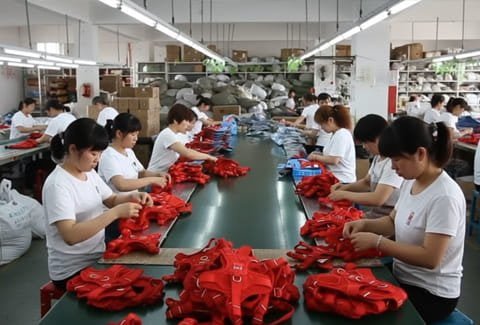
Here’s what happens. The factory sends perfect samples. You approve them. Production starts. Then the first shipment arrives, and 20% of products have crooked stitching, inconsistent fabric weights, or zippers that fail1 after minimal use.
Why does this happen? Low-price factories typically lack systematic quality control processes. They don’t maintain dedicated QC staff. They don’t implement first-article inspection protocols. They don’t conduct in-process quality checks at critical production stages. When your order runs alongside ten other projects, workers make substitutions without documentation—slightly different thread, an alternative zipper supplier, fabric from a different dye batch.
I’ve seen this destroy Amazon sellers. One client chose a factory 35% cheaper than our quote for pet harnesses. The samples were flawless. Mass production used thinner webbing to hit the price point. Within two months, their listing accumulated 47 one-star reviews citing broken buckles and frayed straps. Amazon suppressed their listing. Their brand reputation took years to recover.
The financial damage compounds:
- Return shipping costs from your warehouse back to China
- Rush re-production fees when you’re already late to market
- Lost sales during the correction period
- Damaged marketplace seller ratings that reduce future visibility
- Potential removal of buying privileges on platforms with strict quality thresholds
The Delivery Reliability Gap
Low-cost factories operate on thin margins2. When something goes wrong—a material shipment delays, a key worker gets sick, another client pays rush fees for priority—your order slides. They can’t afford buffer capacity or backup suppliers.
Last year, a Shopify seller placed a pet bed order with a discount factory for Christmas inventory. The agreed delivery was October 15th—plenty of time for sea freight and customs clearance. Production didn’t start until November. The goods arrived December 28th. She missed her entire selling season and had to liquidate inventory at 60% loss in January.
The pattern repeats every peak season: Factories quote aggressive timelines to win orders, then delay production because they’re underwater with commitments. Buyers without contracts specifying penalty clauses have zero leverage.
The Compliance Disaster
This creates the most expensive problems. Pet supplies entering the US, EU, and Japan face specific material regulations:
- US market: CPSIA lead content limits for pet toys3, FDA food-contact material standards for bowls and feeding accessories4, California Proposition 65 for chemical exposure warnings5
- EU market: REACH restrictions on hazardous substances6, specific textile labeling requirements, CE marking for certain electronic pet products
- Japan market: Specific textile safety standards, restricted chemical substances in pet contact materials
Factories without export experience don’t track these regulations. They use whatever materials hit the price target. Your shipment gets held at customs. You pay storage fees while scrambling for compliance documentation that doesn’t exist. Eventually, you either ship everything back or destroy it—both at your expense.
A German wholesaler contacted us after this exact scenario. Their previous factory shipped pet clothing using azo dyes restricted under REACH7. German customs held 5,000 units. The testing and destruction costs exceeded their entire order value. The factory refused responsibility because their contract didn’t specify REACH compliance.
How Do You Verify Real Manufacturing Capability Beyond Marketing Claims?
Factory websites all look identical. Professional photos. ISO certificates. Claims about "state-of-the-art facilities" and "strict quality control." These prove nothing about actual production capability for your specific product needs.
Real manufacturing capability shows up in production line organization, documented quality control processes, and material traceability systems—not showroom samples or certification plaques. Factory size doesn’t predict customization responsiveness; large operations optimized for standard products often respond slowly to small-batch custom orders or new product development.

What You See During Factory Visits
When buyers visit our facility, I walk them through production floors, not conference rooms. Here’s what actually indicates competence:
Production floor organization:
- Are workstations clearly labeled with operation instructions and quality standards?
- Do workers reference written procedures, or work from memory?
- Are materials stored with batch tracking labels, or in unmarked bins?
- Can production managers explain why specific stations exist in their current sequence?
Quality control systems:
- Where is the QC station located—at the end of the line or integrated throughout?
- What measurement tools exist, and are they calibrated? (Check calibration stickers with dates.)
- Do workers stop production when they find defects, or set them aside for later sorting?
- Can the factory show you actual QC reports from previous orders, with defect classifications and corrective actions?
Material traceability:
- Can the factory trace materials back to specific suppliers and purchase dates?
- Do they maintain material certifications (RoHS8, Oeko-Tex9, etc.) for different components?
- How do they handle material substitutions when primary suppliers can’t deliver?
- What’s their process for validating new supplier materials before introducing them to production?
The Documentation Test
Request to see documentation from a recent similar project:
| Document Type | What It Reveals |
|---|---|
| Sample approval sheet | Whether they document specifications formally or work from verbal agreements |
| Production schedule (Gantt chart) | If they plan realistically or just promise what buyers want to hear |
| Quality inspection reports | Whether QC checks actually happen, and if findings trigger corrective actions |
| Material purchase orders | If they maintain supplier relationships or buy spot materials that create consistency issues |
| Shipping documentation | If they handle export paperwork correctly for different destination markets |
When I show buyers our production documentation, several always comment: "Our previous factory never showed us anything like this." That’s the point. Factories without systems can’t produce these documents because they don’t exist.
The Customization Response Pattern
Here’s how to test customization capability without committing to full production:
Send a product modification request: "Can you adjust this pet carrier design to add an internal safety tether and replace the mesh with fire-retardant material?"
Capable factories respond with:
- Questions about the safety tether’s required breaking strength
- Clarification of which fire-retardant standard you need (US, EU, or other)
- Timeline impact analysis
- Material cost differential with specific supplier quotes
- Mockup or technical drawing showing proposed changes
Incapable factories respond with:
- "Yes, no problem, same price"
- Immediate agreement without questions
- Requests to "send a sample and we’ll copy it"
- Quotes that arrive in hours for complex modifications
The second type will agree to anything during negotiation, then encounter "unexpected problems" during production. By then, you’ve paid deposits and missed alternative suppliers’ lead times.
What Questions Should You Ask Before Sending Deposits?
Most buyers negotiate backward. They discuss price first, then try to extract capability information afterward. This sequence guarantees bad matches because factories optimize their answers to close the sale rather than reveal genuine fit.
The three questions that reveal real factory-buyer compatibility: What is your target market and what compliance requirements apply? (Tests export experience.) Standard products or customization? (Tests design capability and MOQ flexibility.) What’s your budget and realistic timeline? (Tests whether the factory educates unrealistic expectations or just takes orders blindly.)
Question 1: What Is Your Target Market?
When buyers tell us "I’m selling in the United States," my first response is: "Which state matters most for your sales volume?" This question confuses some buyers. It shouldn’t.
California Proposition 65 creates different labeling requirements than other states. If a buyer’s Amazon FBA inventory ships to California warehouses, they need Prop 65 compliance even if most customers live elsewhere. Factories with US export experience know this. Factories learning on your order don’t.
For US market buyers, ask factories:
- "What’s your understanding of CPSIA lead content limits for pet toys?"
- "Do you maintain FDA food-contact material certifications for pet bowls?"
- "Have you shipped to California before? Did you handle Proposition 65 warnings?"
If the factory can’t discuss these regulations specifically, they lack US market experience. You’ll become their learning project.
For EU market buyers:
- "Which substances do you check for REACH compliance?"
- "Can you provide REACH compliance declarations for materials in this product?"
- "What’s your process for updating restricted substances when REACH regulations change?"
For Japanese market buyers:
- "What textile safety standards do you follow for pet contact products?"
- "Do you track Japan’s specific chemical substance restrictions?"
- "Have you completed customs clearance documentation for Japan before?"
Question 2: Standard Product or Customization?
This question reveals whether the factory’s business model matches your needs. Large factories running 100,000-unit orders of standard pet leashes often can’t economically handle 1,000-unit custom orders with unique specifications.
Be specific about your requirements:
For standard products:
- "Can I see the exact product specification sheet, not just photos?"
- "What’s the minimum order quantity for your standard version?"
- "How many colorways exist in current production?"
- "What’s lead time if I order today—including Chinese holidays?"
For customization projects:
- "What’s your typical MOQ for custom designs?"
- "Do you charge for sample development? How many revision rounds are included?"
- "Who owns the mold/tooling cost if we develop custom hardware?"
- "What’s your process timeline from design approval to first shipment?"
When buyers tell me they need custom products, I ask: "Custom what—just the color and logo, or custom pattern development?" These create completely different workflows and cost structures.
Question 3: Budget and Timeline Expectations
I ask buyers directly: "What price did you see that you’re using as a benchmark?" Often they’ve received quotes 40% below viable production costs. This creates two possibilities: Either previous quotes were bait-and-switch tactics, or the buyer’s product specifications don’t match what they think they’re ordering.
Realistic factory responses include:
- Education on how material choices affect pricing: "That quoted price uses PVC fabric. For the breathable mesh you requested, cost increases 30%."
- Timeline breakdowns: "Production takes 25 days, Chinese New Year adds 15 days10, shipping is 30 days sea freight—earliest delivery is April 10th."
- MOQ justification: "We can run 500 units, but per-unit cost is 45% higher than at 2,000 units because setup costs get distributed across fewer items11."
Warning signs of problematic factories:
- Immediate agreement with any timeline: "Yes, we can deliver in three weeks" for complex products
- Refusal to explain cost breakdowns: "This is our price, take it or leave it"
- Pressure tactics: "Price increases next week" or "Material costs are rising, order now"
- Inability to explain why their price differs significantly from competitors
Last month, a buyer showed me a quote 50% below our pricing for custom pet backpacks. I asked what material specifications were included. The quote listed "polyester fabric"—no denier count, no water resistance rating, no specific hardware suppliers. That’s not a quote. It’s a placeholder that will change once production clarifies actual requirements.
How Do You Evaluate Factory Communication and Responsiveness?
Price and capability matter, but communication failures destroy more buyer-factory relationships than technical incompetence. Misaligned expectations about specifications, unclear change orders, and inadequate problem-escalation processes create cascading disasters.
Effective factory communication shows up in response time, specificity of answers, proactive problem disclosure, and documentation quality—not friendliness or eagerness to please. Factories that say "yes" to everything during sales conversations create expensive problems during production.
The Response Time Pattern
Track response times across different inquiry stages:
| Inquiry Stage | Expected Response Time | What Delays Signal |
|---|---|---|
| Initial inquiry | 24 hours | Understaffing or disorganization |
| Technical questions | 48 hours | Lack of engineering support |
| Sample approval | 72 hours | Unclear internal processes |
| Production status | Same business day | No real-time production visibility |
| Problem reports | Within 4 hours | Weak crisis management systems |
When a factory takes three days to answer a simple question about thread color during sample approval, how fast will they respond when your shipment sits at the port with documentation errors?
I’ve watched buyers excuse slow communication during negotiation—"They’re probably busy"—then suffer during production crises when responsiveness actually matters. Communication speed during sales predicts communication speed during problems. Believe the pattern.
The Specificity Test
Ask deliberately ambiguous questions to test how factories handle unclear requirements:
"I need pet beds for medium dogs."
Weak factory response: "Okay, we can make them. Please send your logo."
Strong factory response: "Medium dogs vary significantly—roughly what weight range? This affects sizing, foam density, and fabric durability. Also, what’s your target market? This determines filling materials based on local regulations."
The second response shows actual thinking about your project, not just order-taking. Factories that ask clarifying questions during sales continue asking during production. Factories that assume during sales create expensive surprises later.
Documentation Quality Standards
Request samples of standard documents the factory provides:
- Quotation sheets: Do they itemize costs (materials, labor, packaging, shipping), or just list total prices?
- Production schedules: Do they show task dependencies and buffer time, or just list end dates?
- QC reports: Do they include defect classifications with photos, or just "PASS/FAIL" stamps?
- Packing lists: Do they match products to cartons with weights, or provide only total quantities?
Professional documentation reveals systematic thinking. When we send quotations, we break down material costs by component—buyers see exactly what they’re paying for. This creates transparency that prevents disputes when modifications add costs.
What Red Flags Should Immediately Disqualify a Manufacturer?
Some warning signs require immediate disqualification, no matter how attractive other factors appear. These predict catastrophic failures, not minor inconveniences.
Critical red flags that should end evaluation: Unwillingness to provide verifiable client references, inability to explain quality control processes in detail, pressure to pay full deposits before finalizing specifications, vague answers about compliance certification sourcing, and agreement with obviously unrealistic timelines or pricing without explanation.
No Verifiable References
When I tell buyers "We can connect you with our Italian distributor client for reference," some look surprised. They’re used to factories refusing references or providing only email contacts that never respond.
A legitimate factory maintains relationships with multiple clients willing to verify their experience. Ask for references matching your product category and target market. Then actually contact them. Ask specific questions:
- "How did quality consistency compare between samples and bulk production?"
- "When problems occurred, how did the factory handle resolution?"
- "What surprises emerged that you wish you’d known earlier?"
- "Would you use this factory again for new projects?"
If a factory can’t provide contactable references, they either have no satisfied clients or manage so many one-time orders that relationships don’t exist. Neither situation benefits you.
Inability to Explain QC Processes
Ask this question: "Walk me through your quality control process from raw material receipt to final packaging."
Competent factories describe:
- Incoming material inspection procedures and rejection criteria
- First-article inspection after production setup
- In-process quality checks at defined production stages
- Final inspection sampling methodology (AQL levels, defect classification12)
- Corrective action processes when defects exceed thresholds
If a factory responds with vague statements like "We check everything carefully" or "Our workers
-
"Quality Control and Defect Rate Analysis", https://umbrex.com/resources/industry-analyses/how-to-analyze-a-manufacturing-company/quality-control-and-defect-rate-analysis/. Quality control research documents that sample-to-production variation occurs when manufacturers lack systematic QC processes, though specific defect rates vary by industry, product complexity, and factory capabilities. Evidence role: general_support; source type: research. Supports: Quality divergence between samples and mass production is a documented issue in manufacturing. Scope note: The 20% figure appears context-specific rather than a general industry benchmark ↩
-
"The impact of competition on quality and prices in the English care …", https://pmc.ncbi.nlm.nih.gov/articles/PMC4155013/. Manufacturing economics research indicates that extreme price competition can reduce operational buffers, limiting factories’ ability to absorb production disruptions or maintain backup capacity for schedule reliability. Evidence role: mechanism; source type: research. Supports: Price-based competition affects operational capacity and reliability in manufacturing. ↩
-
"Total Lead Content | CPSC.gov", https://www.cpsc.gov/Business–Manufacturing/Business-Education/Lead/Total-Lead-Content. The Consumer Product Safety Improvement Act (CPSIA) sets lead content limits for consumer products, though application to pet toys specifically depends on whether they are marketed for children’s interaction. Evidence role: general_support; source type: government. Supports: CPSIA establishes lead content limits for consumer products including certain pet toys. Scope note: CPSIA primarily targets children’s products; pet-only products may fall under different regulatory frameworks ↩
-
"Food Packaging & Other Substances that Come in Contact with Food", https://www.fda.gov/food/food-ingredients-packaging/food-packaging-other-substances-come-contact-food-information-consumers. The FDA regulates food-contact substances through its food additive petition and notification processes, which apply to materials intended for contact with food or feed. Evidence role: general_support; source type: government. Supports: FDA regulates materials that contact food through food contact substance notification requirements. ↩
-
"About Proposition 65 – OEHHA – CA.gov", https://oehha.ca.gov/proposition-65/about-proposition-65. California’s Safe Drinking Water and Toxic Enforcement Act (Proposition 65) requires warnings before exposing individuals to chemicals known to cause cancer or reproductive harm, applicable when products contain listed substances above specified thresholds. Evidence role: general_support; source type: government. Supports: California’s Proposition 65 requires businesses to warn about significant exposures to listed chemicals. ↩
-
"Registration, Evaluation, Authorisation and Restriction of …", https://en.wikipedia.org/wiki/Registration,_Evaluation,_Authorisation_and_Restriction_of_Chemicals. The European Union’s REACH (Registration, Evaluation, Authorisation and Restriction of Chemicals) regulation establishes restrictions on hazardous substances in articles, including restrictions on substances in textiles and consumer products. Evidence role: general_support; source type: government. Supports: REACH regulation restricts certain hazardous substances in products placed on the EU market. ↩
-
"Comparative Analysis of Azo Dye Restriction in the International …", https://scholarworks.uark.edu/cgi/viewcontent.cgi?article. REACH Annex XVII restricts azocolourants and azodyes which by reductive cleavage release certain aromatic amines in textile and leather articles that may come into direct and prolonged contact with human skin. Evidence role: general_support; source type: government. Supports: REACH restricts azocolourants that release certain carcinogenic aromatic amines. ↩
-
"RoHS", https://en.wikipedia.org/wiki/RoHS. The Restriction of Hazardous Substances Directive (RoHS) is European Union legislation restricting the use of specific hazardous materials in electrical and electronic equipment, limiting substances including lead, mercury, and cadmium. Evidence role: definition; source type: government. Supports: RoHS restricts hazardous substances in electrical and electronic equipment. Scope note: RoHS applies primarily to electronic equipment; relevance to pet supplies is limited to electronic pet products ↩
-
"Oeko-Tex", https://en.wikipedia.org/wiki/Oeko-Tex. The Oeko-Tex Standard 100 is an independent certification system for textiles tested for harmful substances, administered by the International Oeko-Tex Association, a consortium of textile research and testing institutes. Evidence role: definition; source type: institution. Supports: Oeko-Tex operates internationally recognized textile testing and certification standards. ↩
-
"Chinese New Year Shutdown 2026: How to Prepare", https://www.shipbob.com/blog/chinese-new-year-shutdown/. Chinese New Year (Spring Festival) typically results in factory closures of 1-3 weeks, with additional time required for worker return and production ramp-up, commonly adding 2-4 weeks to total manufacturing timelines depending on timing and industry. Evidence role: general_support; source type: other. Supports: Chinese New Year significantly impacts manufacturing schedules in China. Scope note: Specific duration varies by factory, region, and year; 15 days represents an approximate middle estimate ↩
-
"Economies of scale", https://en.wikipedia.org/wiki/Economies_of_scale. Manufacturing economics principles establish that fixed setup costs (tooling, line configuration, quality system setup) are distributed across production volume, resulting in higher per-unit costs for smaller batches as fixed costs are allocated over fewer units. Evidence role: mechanism; source type: education. Supports: Fixed setup costs create per-unit cost variations based on production volume. ↩
-
"Limite de Qualité Acceptable (AQL) – QIMA", https://www.qima.fr/aql-acceptable-quality-limit. Acceptable Quality Limit (AQL) is defined in ISO 2859 standards for sampling procedures and provides a statistical framework for acceptance sampling inspection by attributes, including defect classification systems. Evidence role: definition; source type: institution. Supports: AQL is a standardized statistical sampling methodology for quality inspection. ↩