
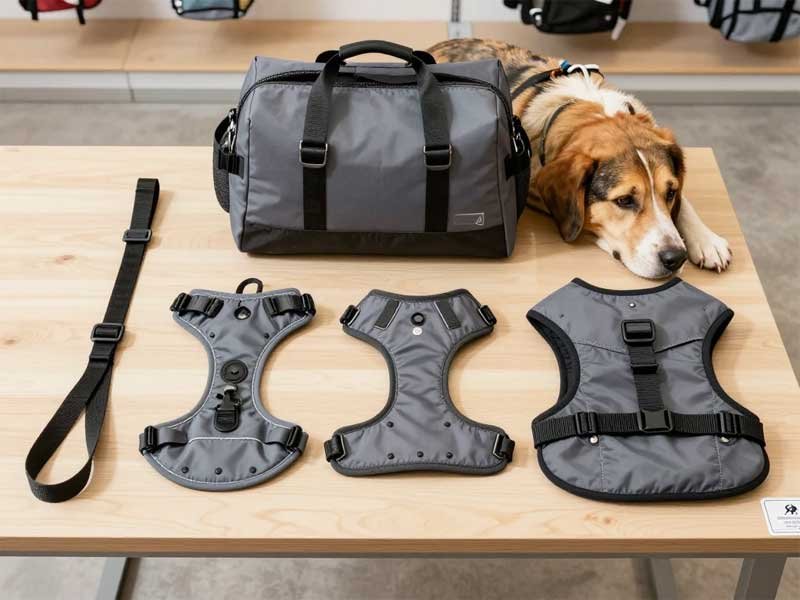
Every few months, I get a frustrated email from a client whose brand-new dog harness line is flooding back with customer complaints—stitching failure, coating peel, or worse, worried pet owners reporting strange residue after their dog chewed the strap. In almost every case, the root cause traces back to a single sourcing decision made six months earlier: picking a fabric coating based on the highest waterproof number on a spec sheet, without understanding how that coating actually performs under the real-world stress of teeth, claws, and constant tension.
If you’re sourcing heavy-duty dog gear—leashes, harnesses, travel backpacks, or tactical vests—the right fabric coating isn’t the one with the most impressive technical rating. It’s the one that survives chewing stress at seams, maintains stitch-hole integrity under pulling force, balances breathability in hot weather, and passes pet-safe compliance standards without triggering expensive recalls. Coating selection is risk management, not spec optimization—you’re choosing which failure modes your brand can live with, and which ones will destroy your return rate and customer trust.
When a buyer first reaches out asking about "the best waterproof fabric for dog collars," I know we need to have a longer conversation. The coatings that deliver extreme weather protection often create the exact durability problems that trigger one-star reviews—cracking at stress points, delaminating from the base fabric, or trapping moisture against the dog’s coat. Let me walk you through what I actually verify with suppliers before approving materials for client dog gear projects.
How Do Coating Types Affect Chewing and Bite Damage?
Clients ask about tear strength and abrasion resistance constantly, but the failure mode that catches everyone off guard is localized bite damage—when a dog clamps down on a strap or handle during play, creating concentrated pressure that no flat-surface durability test can predict.
Chew damage doesn’t correlate cleanly with standard abrasion ratings. Coatings fail under bite stress in two ways: the coating layer itself punctures or tears (material failure), or the coating delaminates from the base fabric along the bite line (adhesion failure). The coating type determines which failure mode you’ll see first—and whether the damage spreads or stays contained to the bite zone.
Why PU Coating Performs Differently Than TPU Lamination
I need to clarify this distinction every time we receive a sample inquiry, because the terms get used interchangeably in marketing materials—but the physical structures are completely different.
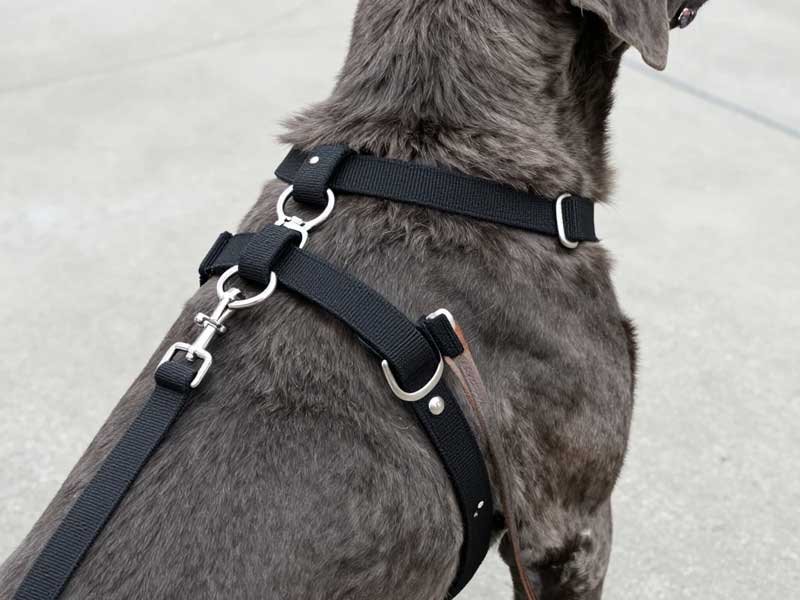
PU (polyurethane) coating is a liquid resin applied to one or both sides of the base fabric, then cured to form a thin, flexible layer. It adds water resistance and some abrasion protection, but the coating itself is relatively soft. Under bite pressure, PU tends to indent and stretch rather than crack immediately. The problem emerges at seams: if a dog chews near stitching, the flexible coating can peel back from the thread holes, and once delamination starts at a seam, it spreads along the entire seam line within a few weeks of use.
TPU (thermoplastic polyurethane) lamination, by contrast, is a pre-formed film layer bonded to the fabric under heat and pressure. It’s structurally more rigid and provides better puncture resistance against sharp objects. But when a dog bites down on TPU-laminated fabric, the film layer can crack at the bite point if the base fabric flexes underneath it—because the TPU film and the fabric move at different rates under stress. The critical risk with TPU lamination for dog gear is at stitched seams: if the stitching needle fully penetrates the TPU film layer (which it must, to create a secure seam), you’ve created a line of perforations in the waterproof membrane. Under repeated pulling or chewing near the seam, the TPU film can tear along that perforation line, causing catastrophic delamination.
In complaint resolution cases, I’ve traced chewing failures back to both coating types—but for opposite reasons. PU fails because it’s too soft and delaminates easily once damage starts. TPU fails because it’s too rigid and cracks under localized bite stress. Neither coating is inherently "better" for bite resistance—you’re choosing which failure mode fits your product positioning and customer expectations.
Acrylic and Silicone Coatings Under Bite Stress
Some suppliers pitch acrylic-coated fabrics as an upgrade for outdoor dog gear, emphasizing UV resistance and color retention. Acrylic coatings do maintain appearance longer than PU, but they’re significantly more brittle. In sample testing for a client’s tactical dog vest line, we deliberately subjected acrylic-coated straps to simulated bite pressure using a jaw clamp fixture—the coating cracked within the first compression cycle, and the cracks propagated outward from the bite zone during subsequent flex cycles. Acrylic works well for decorative panels or non-contact surfaces (like the back panel of a dog backpack), but it’s a poor choice for straps, handles, or any area a dog can grab.
Silicone coatings occupy an interesting middle ground. They’re extremely flexible and won’t crack under bite stress, which makes them appealing at first glance. The durability issue with silicone is that it doesn’t chemically bond to the base fabric as strongly as PU or TPU—it’s more of a mechanical grip. When a dog repeatedly chews or claws at silicone-coated fabric, the coating can peel away in sheets rather than cracking in place. I’ve seen this failure mode on imported dog raincoats where suppliers used silicone coating to hit a low price point—after three or four wash cycles, the coating started peeling at the edges, and customer returns spiked within the first month of sales.
What Waterproof Rating Do You Actually Need for Dog Gear?
This is where I spend the most time correcting misconceptions during supplier qualification calls. Buyers see fabric specs listing 8000mm or 10,000mm waterproof ratings and assume higher is always better—but for dog gear, excessive waterproofing almost always creates downstream problems that aren’t visible until products hit the field.
For heavy-duty dog gear, a waterproof rating of 3000–5000mm is typically sufficient for real-world wet conditions1—rain exposure during walks, incidental puddle contact, or hose-down cleaning. Ratings above 5000mm start sacrificing breathability, which causes sweat and moisture buildup against the dog’s coat during active use, leading to comfort complaints, skin irritation, and negative reviews that cite "overheating." The goal isn’t maximum barrier protection; it’s balanced moisture management that keeps external water out while allowing internal vapor to escape.
The Breathability Tradeoff Buyers Miss
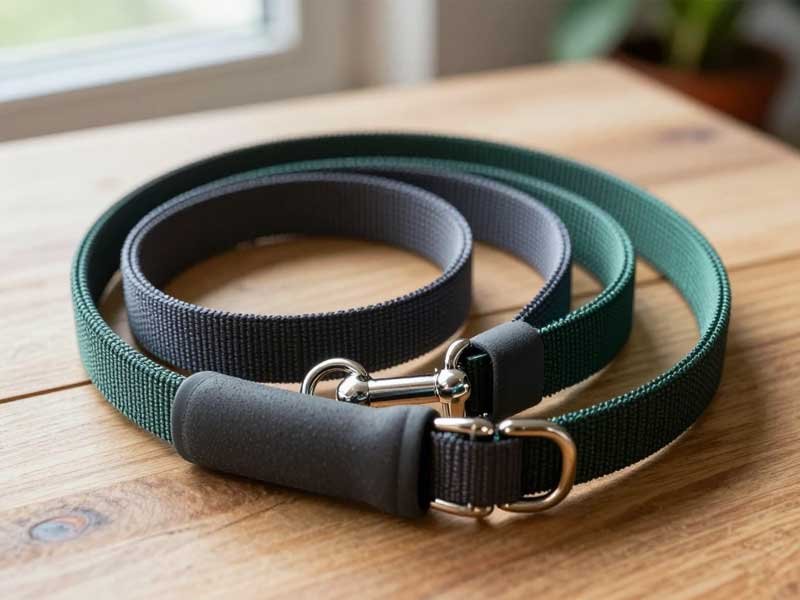
Waterproof coatings work by filling the gaps between fabric yarns with a continuous polymer film—but that same film also blocks air circulation and vapor transmission. The thicker and more continuous the coating, the higher the waterproof rating, but the lower the breathability (measured as MVTR: Moisture Vapor Transmission Rate)2.
In dog gear manufacturing, I’ve seen this play out in client complaint patterns: brands using 8000mm+ coated fabrics consistently report higher return rates citing "dog seems uncomfortable" or "panting excessively during use"—complaints that disappear when we switch the same design to 3000–4000mm coated fabric with higher breathability specs. Dogs regulate body temperature primarily through panting, not sweating3, so they’re more sensitive to trapped heat than humans wearing comparable outdoor gear.
The specific use case determines the acceptable waterproof threshold:
- Leashes and collars: 1000–3000mm is adequate—these items experience rain exposure but minimal prolonged wet contact. Prioritize flexibility and quick-dry base fabric over high waterproofing.
- Harnesses and tactical vests: 3000–5000mm for body-contact areas; prioritize breathability to prevent coat matting and skin moisture buildup.
- Dog backpacks and panniers: 5000–8000mm for storage compartments that need to protect cargo (food, electronics), but keep the back panel touching the dog’s coat at 3000mm or lower.
- Full raincoats: 5000–8000mm for shell fabric, but only if the design includes vented panels or mesh lining to maintain air circulation.
Why "Fully Waterproof" Isn’t What Your Customers Want
A client once insisted on 10,000mm TPU-laminated fabric for a premium dog hiking vest, believing it would justify a higher retail price point. We ran the first production batch, shipped samples for field testing, and within two weeks received feedback that dogs refused to wear the vest for more than 10 minutes in warm weather—they’d sit down and scratch at the straps, signaling overheating. The product never launched. The fabric delivered on its waterproof promise, but created a comfort failure the spec sheet didn’t predict.
In procurement risk management, I’ve learned that "waterproof enough" beats "maximum waterproof" every time for dog gear—you want the coating to handle realistic wet conditions without suffocating the animal underneath.
How Do Coatings Perform at Stitched Seams Under Stress?
This is the failure mode that generates the most expensive returns, because seam failure doesn’t show up during initial quality inspection—it emerges after 30–90 days of field use, when customer acquisition costs are already sunk and return logistics eat into margin.
Coating chemistry directly affects how stitch holes behave under repeated tension. Flexible coatings like PU stretch around thread holes and distribute stress along the seam line. Rigid coatings like acrylic or thick TPU concentrate stress at each individual stitch hole, creating micro-cracks that grow with each pull cycle. Over time, this causes progressive seam failure—not because the stitching itself broke, but because the fabric coating tore along the stitch line, separating from the base fabric.
The Stitching Penetration Problem
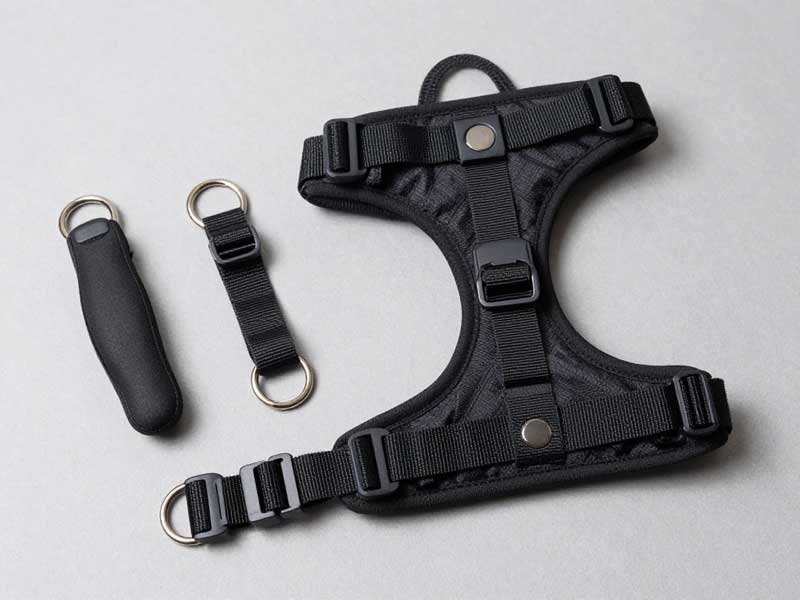
When we evaluate coated fabrics for client harness projects, one of the first things I verify with the supplier is whether the coating is applied before or after weaving. This determines how the stitching needle interacts with the coating layer.
For PU-coated fabrics, the coating is typically applied as a post-weave treatment, so the needle passes through both the base fabric and the coating layer simultaneously. This creates a relatively uniform stitch hole where the PU coating "wraps" around the thread. The durability risk here is delamination—if the base fabric and coating don’t have strong adhesion, the mechanical stress of thread tension can slowly peel the coating away from the fabric at each stitch hole. I’ve traced this failure mode in returned leashes where the stitching was intact, but the coating had separated along the entire seam, allowing water infiltration and accelerated fabric fraying.
For TPU-laminated fabrics, the film layer is bonded after weaving, so the stitching needle punches through a pre-formed waterproof membrane. Every stitch hole is now a permanent breach in the waterproof layer—which is why high-quality TPU dog gear requires seam sealing (applying liquid sealant or heat-sealed tape over the seam) to restore water resistance. But here’s the problem: seam sealing adds cost and production time, so budget suppliers skip it. The result is "waterproof fabric" with unsealed seams that leak from day one—a common complaint in low-price imported dog raincoats.
Coating Thickness and Crack Propagation
Thicker coatings sound more durable on paper, but they’re actually more prone to cracking at seams. When you stitch through a heavily coated fabric (3–5 layers of PU, or a thick TPU film), the coating surrounding each stitch hole becomes a stress concentrator. As the fabric flexes during use (which happens continuously on leashes and harness straps), the rigid coating layer cracks outward from each stitch hole. These micro-cracks are invisible initially, but they connect over time, creating a continuous crack line along the entire seam.
In supplier quality audits, I specifically test seam integrity by flexing a 6-inch sample strip back and forth 100 times, then inspecting the seam under magnification for coating cracks. If cracks are already visible after 100 flex cycles, the seam will fail catastrophically within the first month of customer use. This test eliminates roughly 40% of initial fabric samples from consideration—not because the base fabric is weak, but because the coating chemistry doesn’t tolerate stitching stress.
Which Coatings Pass Pet-Safe Compliance Standards?
This is the area where I see the most dangerous sourcing shortcuts, because compliance gaps don’t show up as visible quality defects—they’re chemical safety risks that expose your brand to recall liability and regulatory penalties.
Not all fabric coatings are pet-safe. Some low-cost PVC coatings, solvent-based PU finishes, and untested imported acrylic treatments contain phthalates, heavy metals, or volatile organic compounds that pose health risks if dogs chew, lick, or maintain prolonged skin contact with the fabric. These substances aren’t always disclosed on material spec sheets, which is why explicit third-party compliance documentation is non-negotiable before bulk orders.
REACH, CA65, and the Compliance Gap
For products sold in the EU or California, REACH (Registration, Evaluation, Authorization of Chemicals) and California Proposition 65 (CA65) set legal limits on hazardous substances in consumer products. For pet gear, the critical restricted substances include:
| Substance Class | Compliance Concern | Coating Types at Risk |
|---|---|---|
| Phthalates (plasticizers) | Reproductive toxicity, developmental harm | PVC coatings, low-grade PU |
| Heavy metals (lead, cadmium) | Poisoning from chewing/licking | Pigmented coatings, metallic finishes |
| Formaldehyde | Skin irritation, carcinogenic | Solvent-based PU, some acrylic coatings |
| Azo dyes4 | Carcinogenic breakdown products | Dyed coatings (reds, yellows especially) |
In client sourcing projects, I require suppliers to provide current (within 12 months) third-party test reports specifically for the coating formulation being used—not just the base fabric, not a generic "we’re REACH-compliant" statement, but lab test data for the actual PU or TPU coating batch we’re ordering. This eliminates roughly half of low-cost suppliers immediately, because many use coating formulations that haven’t been tested or can’t pass.
The Licking and Chewing Hazard
Unlike human apparel, dog gear experiences frequent oral contact—dogs chew straps during play, lick surfaces after exercise, and hold leash handles in their mouths during retrieval training. This creates a direct ingestion pathway for coating residues.
I handled a particularly concerning complaint case where a client’s imported dog collar line received reports of dogs vomiting after chewing the collar—lab analysis revealed the PVC coating contained phthalate levels above EU limits. The client had to issue a voluntary recall, destroy $80,000+ in inventory, and settle with affected customers. The supplier had provided generic "non-toxic" assurances but no actual test data for the coating chemistry.
In procurement risk management, I treat pet-safe compliance as a hard gate: if a supplier can’t produce third-party test reports for coating chemistry within 48 hours of request, I move to the next supplier. The cost of a compliance failure—recall expenses, legal liability, brand reputation damage—far outweighs any unit cost savings from an untested coating.
-
"What do the waterproof ratings mean for waterproof jackets?", https://www.safety1stnz.com/what-do-the-waterproof-ratings-mean-for-waterproof-jackets/?srsltid=AfmBOopehfCO1pEuFBe33-QAuVTQPNvRBbzkWxIFKY4u_jucY8oOvUti. Textile waterproof ratings of 3000-5000mm hydrostatic head typically provide adequate protection against moderate rain and wet conditions in outdoor applications, representing the pressure equivalent of sustained rainfall. Evidence role: general_support; source type: research. Supports: the relationship between hydrostatic head measurements (in mm) and practical water resistance in textile applications. Scope note: General outdoor textile standard; specific adequacy depends on exposure duration, mechanical stress, and seam construction ↩
-
"Moisture Vapor Transmission Rate – Wilson College of Textiles", https://textiles.ncsu.edu/tpacc/comfort-performance/moisture-vapor-transmission-rate/. Moisture Vapor Transmission Rate (MVTR) quantifies fabric breathability by measuring the mass of water vapor passing through a material per unit area over time, typically expressed in g/m²/24hr under standardized test conditions. Evidence role: definition; source type: research. Supports: the use of Moisture Vapor Transmission Rate as a standardized metric for textile breathability. ↩
-
"Panting in dogs: paths of air flow in response to heat and …", https://pubmed.ncbi.nlm.nih.gov/7280382/. Dogs rely predominantly on panting for evaporative cooling, as they possess limited sweat glands (primarily on paw pads) compared to humans, making respiratory heat dissipation their primary thermoregulatory mechanism. Evidence role: mechanism; source type: education. Supports: the primary role of panting in canine thermoregulation compared to limited sweat gland function. ↩
-
"Azo dyes and human health: A review", https://pubmed.ncbi.nlm.nih.gov/27635691/. Azo dyes are synthetic organic compounds characterized by nitrogen-nitrogen double bonds (azo groups) that constitute the largest class of synthetic dyes used in textile coloring, though certain azo dyes can release carcinogenic aromatic amines upon reductive cleavage. Evidence role: definition; source type: encyclopedia. Supports: the chemical structure and widespread use of azo dyes in textile applications. Scope note: Not all azo dyes are hazardous; regulatory concern focuses on specific azo compounds that degrade into restricted aromatic amines ↩