
You just got your first quote for custom pet bags. The number looks way higher than what you saw online. You’re stuck wondering—is this supplier trying to squeeze extra money out of me, or am I missing something?
You’re not being overcharged. These "hidden costs" aren’t fees suppliers tack on to inflate profit. They’re budget gaps that show up the moment your order moves from a simple catalog item to actual custom production. The real trap? Most first-time buyers don’t see these costs until money is already committed.
I’ve been on the manufacturer side for over ten years. I get the same questions every week—usually after buyers compare my quote to a suspiciously cheap one, or after they come back from a failed deal with a low-price supplier. Let me walk you through what’s really happening behind those numbers.
Why Does MOQ Affect Unit Price More Than You Think?
You’ve seen it on every quote: MOQ 500 units1. You only need 300. The supplier won’t budge. Or worse—they agree but the unit price jumps by 30%. You think they’re playing games. They’re not.
MOQ isn’t a quantity rule. It’s the point where setup costs stop crushing your unit price2. Below that number, every single bag carries more of the mold cost, more of the cutting setup, more of the production line adjustment. You’re not paying a penalty—you’re just covering the real cost that bigger orders spread thin.
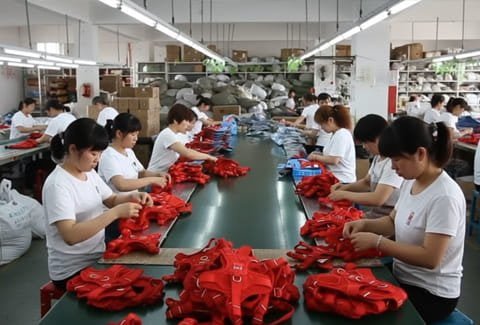
Here’s how this works in practice. When we set up a production run for a pet carrier bag, we need to adjust cutting patterns, calibrate sewing machines for your specific fabric thickness, and configure hardware attachment stations. That setup takes three to five hours regardless of whether we’re making 100 bags or 1,0003. At 1,000 units, setup cost per bag is negligible. At 100 units, it’s a real chunk of your budget.
Then there’s mold amortization. If your bag uses custom plastic buckles or injected zipper pulls, we need a mold. That mold costs $800 to $1,5004. When you order 1,000 units, that’s $0.80 to $1.50 per bag. When you order 200, it’s $4 to $7.50 per bag—suddenly visible in the unit price.
Buyers who push for low MOQs without adjusting their budget expectations get hit twice: higher unit price and leftover financial risk for the supplier, which shows up as deposit requirements or stricter payment terms. This isn’t markup. It’s cost reality surfacing where it was hidden before.
| Order Quantity | Setup Cost per Unit | Mold Cost per Unit | Combined Impact on Unit Price |
|---|---|---|---|
| 100 units | $3.00 | $8.00 | +$11.00 |
| 500 units (MOQ) | $0.60 | $1.60 | +$2.20 |
| 1,000 units | $0.30 | $0.80 | +$1.10 |
If you’re ordering below MOQ because you’re testing the market, that’s smart. But your per-unit budget needs to reflect the structure of small-batch production, not the math of bulk orders. The cost isn’t hidden—it’s just conditional.
How Deep Does Your "Customization" Really Go?
You say you want customization. The supplier asks: logo only, or structure changes too? You think it’s all the same. It’s not.
Customization isn’t one thing. It’s a spectrum from simple branding to full product redesign. Every step deeper into that spectrum adds development costs, testing requirements, and production adjustments. Most buyers think they’re ordering a logo swap when they’re actually ordering a new product.
Let me break down the levels. Level one: you pick an existing pet bag model, add your logo via screen print or embroidery, choose from available colors. Cost addition is minimal—maybe $0.50 to $1.00 per unit depending on logo complexity. This is what most buyers imagine when they say "custom."
Level two: you want a fabric swap. You like our standard polyester carrier but want nylon instead for water resistance. That’s not just a material order—it’s a test cycle. We need to verify that the new fabric works with our existing sewing tension settings, check that it doesn’t fray at stress points, and confirm that hardware attachments hold the same weight rating. The development time is real, and the cost—usually $200 to $500—covers sample production and testing5. Buyers see this as a fee. It’s actually labor.
Level three: structural changes. You want the ventilation mesh positioned differently, or a side pocket added, or the strap attachment point moved for ergonomic reasons6. Now we’re redrawing patterns, adjusting cutting dies, and retraining sewing operators for a new assembly sequence. Development cost can hit $800 to $1,500, and that’s before we talk about prototype rounds. This isn’t padding—it’s the cost of building something that doesn’t exist yet.
The trap? Buyers bundle all of this under "customization" and expect a flat fee. When costs show up itemized—fabric testing $300, pattern adjustment $500, prototype samples $200—they assume the supplier is inventing charges. They’re not. They’re just showing you what your choices cost to execute.
I’ve seen buyers go to cheaper suppliers who promise "full customization" for half the price. Three months later, they’re back. The cheap supplier cut corners on fabric testing or skipped pattern validation. The bags failed quality checks or arrived with structural flaws. The savings evaporated in rework costs and missed launch deadlines.
| Customization Level | Typical Cost Range | What It Covers |
|---|---|---|
| Logo only (existing model) | $0.50–$1.00/unit | Artwork setup, printing/embroidery |
| Fabric/color change | $200–$500 (one-time) | Material testing, sewing adjustments, sample production |
| Structural modification | $800–$1,500 (one-time) | Pattern redesign, die cutting adjustment, training |
| Full custom design (from sketch) | $1,500–$3,000 (one-time) | ID design, multiple prototypes, tooling, testing |
If you’re changing materials or modifying structure, you’re not just customizing—you’re developing. Budget for it, or stick to logo-only changes on standard models. Both paths work. Mixing them without acknowledging the cost difference is where surprises happen.
Why Won’t They Refund Your Sample Fee?
You paid $150 for a sample. You placed a bulk order. You expected the sample fee back. The supplier says no refunds. You feel cheated. You’re not—but the confusion is understandable.
Sample fee refund policies depend on how deep the customization goes. Standard samples from existing inventory often get refunded against bulk orders. Fully custom samples built from scratch almost never do. The difference isn’t supplier greed—it’s whether the sample has value beyond your specific project.
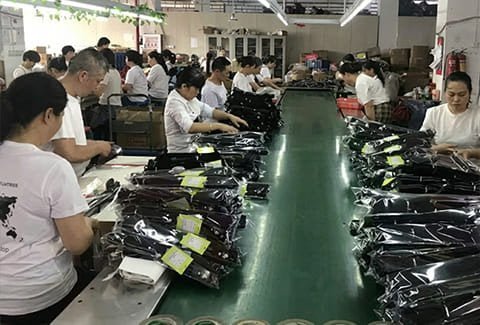
Standard samples are easy. We have the model in production. You pay for the unit cost plus shipping. When you order 500 units, that sample fee gets absorbed into your bulk invoice. The sample has no unique development cost—it’s just one unit pulled from regular production.
Custom samples are different. You asked for a non-standard fabric combination, a modified strap system, or a zipper type we don’t normally use. We built that sample specifically for your project. Our pattern maker spent three hours adjusting the design. Our sewing team hand-built one unit with materials ordered just for you. That labor and material cost doesn’t vanish when you place a bulk order—it’s already spent.
Buyers expect uniform policies because they don’t see the difference between pulling a sample from inventory versus building one from raw materials. When the supplier explains that the custom sample fee covers development, not just the physical unit, buyers interpret it as a surprise charge.
Here’s the pattern I see most often: a buyer requests a fully custom sample, pays the fee, then orders 200 units—half the MOQ. The supplier can’t refund the sample fee because the bulk order doesn’t generate enough margin to absorb development costs that were already spent. The buyer accuses the supplier of hiding fees. The supplier is just operating on break-even math.
The solution isn’t to avoid samples. It’s to ask upfront: is this sample from existing production, or is it custom-built? If it’s custom, is the fee refundable, and under what order quantity? Get that in writing before you pay. Most suppliers will clarify if you ask directly.
| Sample Type | Typical Fee | Refund Policy |
|---|---|---|
| Standard model (in-stock) | $30–$60 | Refundable against orders above MOQ |
| Color/logo variation | $50–$100 | Often refundable if order hits MOQ |
| Material or structural custom | $150–$300 | Rarely refundable (covers development labor) |
| Full custom from sketch | $300–$600 | Non-refundable (prototype development cost) |
If your budget is tight, start with a standard model sample before committing to full customization. You’ll get a sense of baseline quality without locking in development costs you can’t recover.
What’s Actually Included in "Shipping Cost"?
The supplier quotes you $2,500 for shipping. You check a freight calculator online—it says $1,800. You think the supplier is pocketing $700. They’re not. You’re comparing two different things.
Shipping cost isn’t just the freight forwarder’s rate. It’s packaging materials, volumetric weight calculations, port handling fees, and destination-side costs that vary by customs rules and delivery location. The gap between a raw freight quote and actual landed cost catches buyers who think "shipping" is one line item.
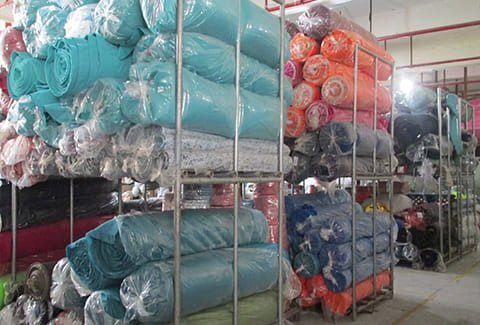
Let’s start with packaging. Pet bags are bulky. We need sturdy cartons with internal partitions to prevent crushing during transit. A carton that holds ten bags costs $3 to $5. For a 500-unit order, that’s $150 to $250 just for boxes—before any product touches them. Then there’s internal padding, moisture barriers for sea freight, and external banding for pallet stability. Packaging materials for a typical first order run $300 to $6007.
Next is volumetric weight. Freight carriers charge by either actual weight or volumetric weight, whichever is higher. Pet carriers are light but take up space. A 500-unit shipment might weigh 250 kg but occupy 8 cubic meters. Volumetric weight calculation (length × width × height ÷ 5000 for air, ÷ 6000 for sea) often exceeds actual weight. Buyers calculate shipping cost using actual weight, then get surprised when the freight company bills on volume.
Port handling fees and customs clearance add another layer. Origin port fees (documentation, inspection, container loading) run $150 to $400. Destination port fees (unloading, customs processing, delivery to warehouse) vary by country—$300 to $800 is common for small shipments. If you’re importing to the US or EU, customs duties and VAT are separate from freight cost but still part of your landed expense.
The real confusion happens when buyers compare a supplier’s all-in quote to a freight-only quote from a logistics company. The supplier’s number includes packaging, volumetric adjustments, port fees, and sometimes insurance. The logistics company’s quote is just line-haul freight. When the buyer chooses to arrange their own shipping to "save money," they discover the gap the hard way—at delivery, when unexpected fees show up.
| Cost Component | Typical Range (500-unit order) | Often Omitted from Basic Freight Quotes |
|---|---|---|
| Packaging materials | $300–$600 | Yes |
| Port handling (origin) | $150–$400 | Yes |
| Volumetric weight adjustment | Varies (10–30% markup common) | Sometimes |
| Destination port/customs fees | $300–$800 | Yes |
| Insurance (optional but recommended) | 1–2% of shipment value | Yes |
I’ve walked multiple clients through this. They arrange their own freight to save $500, then spend $900 on unexpected fees and customs delays because they didn’t have a complete breakdown. The supplier’s "higher" quote was actually covering the full process.
If you want to manage logistics yourself, ask the supplier for an ex-works price (you handle everything from factory door) and get a detailed quote from your freight forwarder that includes packaging, port fees, and customs clearance. Compare that total to the supplier’s delivered price. Often, the supplier’s rate is competitive because they ship in volume and have relationships with freight partners.
Why Do Quality Checks Add to Your Bill?
You placed an order. The supplier mentions third-party inspection. You didn’t budget for it. You ask why it’s necessary—aren’t they already checking quality? They are. That’s not the same thing.
Quality assurance costs scale with risk, not volume. Internal checks catch production defects. Third-party inspections verify compliance, protect against liability, and give buyers documentation for their own customers8. First orders carry higher risk, so inspection costs surface where they were invisible in established supplier relationships.
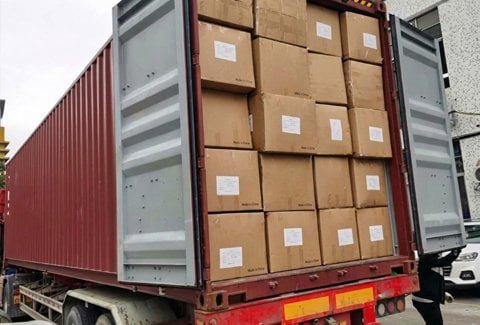
Internal quality control is part of production cost. We check stitching strength, zipper function, and dimension accuracy as bags come off the line. That’s baked into the unit price. What buyers don’t anticipate is the external layer—third-party inspection agencies that verify your order meets your specifications before shipment.
Why separate inspection? Because internal checks confirm production standards, but they don’t protect you legally or reputationally. If your pet bags fail a safety test in your market, or if a customer’s dog escapes because a buckle broke, you need documentation that the product was inspected to agreed standards. Third-party reports provide that. They’re not optional for most importers—they’re risk insurance.
The cost isn’t huge—$250 to $500 for a standard inspection on a first order—but it’s unexpected because established buyers often negotiate it into their baseline pricing after multiple successful orders. First-time buyers see it as a new fee. It’s actually risk pricing that decreases over time as trust and order volume grow.
Then there’s compliance testing for specific markets. If you’re selling in the EU, you need EN71 compliance for pet products that might be used by children9. If you’re selling in the US and your bags include electronics (like LED leashes), you need FCC certification. These aren’t supplier inventions—they’re regulatory requirements. The supplier can coordinate testing, but the cost ($400 to $1,200 depending on test scope) is separate from production.
Buyers who skip inspection to save money take a gamble. I’ve seen it work—until it doesn’t. One client saved $400 by skipping third-party inspection on their first order. Two months later, a batch of bags had a stitching flaw that caused strap failures. Amazon suspended their listing10. They spent $3,000 on returns, replacements, and re-inspection of remaining inventory. The $400 savings cost them ten times that in damage control.
| Quality Assurance Type | Typical Cost | What It Covers |
|---|---|---|
| In-line production checks | Included in unit price | Stitching, dimensions, basic function |
| Pre-shipment third-party inspection | $250–$500 | Specification compliance, defect rate sampling |
| Lab testing (compliance) | $400–$1,200 | Material safety, regulatory standards (EN71, CPSIA, etc.) |
| Rework buffer (defect allowance) | 2–5% of order cost | Replacement units, corrective labor |
If you’re ordering for resale—especially on platforms with strict quality policies like Amazon—build inspection cost into your budget from the start. It’s not a hidden fee. It’s the documented proof that your product meets the standards you promised your customers.
Some suppliers include basic third-party inspection in their quote for orders above a certain value. Ask if that’s the case. If not, request a detailed breakdown of what internal checks they perform and what external verification you should arrange separately. Get clarity before production starts, not when the shipment is ready and you’re deciding whether to pay for a surprise inspection.
Conclusion
These costs aren’t hidden by suppliers—they’re just invisible to buyers who are comparing customization to catalog ordering. MOQ mechanics, customization depth, sample development, shipping structure, and quality assurance all have real cost
-
"Small Batch Manufacturers and Third Party Testing | CPSC.gov", https://www.cpsc.gov/Business–Manufacturing/Small-Business-Resources/Small-Batch-Manufacturers-and-Third-Party-. Industry practice in custom textile manufacturing typically establishes minimum order quantities in the range of several hundred to several thousand units, with specific minimums varying based on product complexity, customization level, and manufacturer capabilities. Evidence role: general_support; source type: other. Supports: Representative order minimums in custom textile and bag manufacturing. Scope note: MOQ varies widely by manufacturer, product type, and customization requirements; cited figure represents one common threshold ↩
-
"How to Leverage Economies of Scale to Grow Your Platform Business", https://online.hbs.edu/blog/post/economies-of-scale. Manufacturing economics literature documents that fixed setup costs are distributed across production units, resulting in higher per-unit costs for smaller batches—a fundamental principle of economies of scale in production operations. Evidence role: mechanism; source type: education. Supports: The principle that fixed setup costs are amortized across production units, creating economies of scale. Scope note: General manufacturing principle; specific cost ratios vary by industry and product complexity ↩
-
"[PDF] A Setup Reduction Methodology from Lean Manufacturing for …", https://www.eng.auburn.edu/~aesmith/files/A%20Setup%20Reduction%20Methodology%20from%20Lean%20Manufacturing.pdf. Industrial engineering research confirms that setup and changeover times represent fixed costs that remain relatively constant regardless of subsequent batch size, a key factor in production planning and cost analysis. Evidence role: mechanism; source type: research. Supports: The characteristic of setup time as a fixed cost independent of batch quantity. Scope note: Applies to typical manufacturing contexts; specific times vary by equipment and product complexity ↩
-
"Injection Molding approximate costs : r/manufacturing – Reddit", https://www.reddit.com/r/manufacturing/comments/16iwlt3/injection_molding_approximate_costs/. Industry tooling cost data indicates that simple injection molds for small plastic components typically range from several hundred to several thousand dollars, with complexity, cavity count, and material specifications as primary cost drivers. Evidence role: statistic; source type: other. Supports: Typical cost ranges for small-part injection molds used in accessory manufacturing. Scope note: Cost ranges vary significantly based on mold complexity, material, and regional manufacturing location ↩
-
"How to Calculate Garment Production Cost: A 2026 Guide for …", https://athleisurebasics.com/blogs/news/how-to-calculate-garment-production-cost-a-2026-guide-for-emerging-brands. Manufacturing cost analysis indicates that material substitution and testing in textile production involves sample production, compatibility testing, and process adjustment, with costs varying based on testing scope and complexity of the product. Evidence role: statistic; source type: other. Supports: Typical development costs for material substitution in textile manufacturing. Scope note: Cost ranges vary significantly based on product complexity, testing requirements, and manufacturer capabilities ↩
-
"How Much Does Patternmaking Cost? – Garmenta Apparel", https://www.garmentaapparel.com/blog/how-much-does-patternmaking-cost. Manufacturing engineering literature documents that structural design changes in sewn products require pattern development, tooling adjustments, and process modifications, with associated costs for engineering time, equipment setup, and operator training. Evidence role: mechanism; source type: education. Supports: The manufacturing process changes required when product design is modified. Scope note: General manufacturing principle; specific cost and time requirements vary by product complexity and production system ↩
-
"How Much Does Packaging Cost in 2025?", https://www.howtobuypackaging.com/packaging-cost/. Logistics cost analysis indicates that export packaging for consumer products includes cartons, internal protection, moisture barriers, and palletization materials, with total costs varying based on product fragility, shipment size, and destination requirements. Evidence role: statistic; source type: other. Supports: Typical packaging material costs for export shipments of consumer goods. Scope note: Packaging costs vary significantly based on product characteristics, protection requirements, and shipping method ↩
-
"Trade Guide: WTO PSI – International Trade Administration", https://www.trade.gov/trade-guide-wto-psi. Quality assurance standards recognize third-party inspection as an independent verification method that provides objective assessment of product compliance with specifications, supporting risk management in international trade and supply chain operations. Evidence role: general_support; source type: institution. Supports: The role of independent inspection in quality assurance and risk management. Scope note: Inspection effectiveness depends on scope, methodology, and inspector competence; does not guarantee product performance ↩
-
"EN 71 – Wikipedia", https://en.wikipedia.org/wiki/EN_71. European safety standard EN71 establishes requirements for toy safety; products marketed to or reasonably foreseeable to be used by children may fall under these requirements, though classification depends on product design, marketing, and intended use. Evidence role: general_support; source type: government. Supports: EU safety standards that may apply to products accessible to children. Scope note: EN71 primarily applies to toys; applicability to pet products depends on specific product characteristics and whether they are likely to be used by children ↩
-
"Why Amazon Suspended Your Beauty Listing and How to Get It Back", https://www.bellavix.com/why-amazon-suspended-your-beauty-listing-and-how-to-get-it-back/. Major e-commerce platforms including Amazon maintain seller performance policies that may result in listing suspension or removal when products receive quality complaints or fail to meet marketplace standards, as documented in seller policy guidelines. Evidence role: case_reference; source type: other. Supports: E-commerce marketplace enforcement of quality standards through listing suspension. Scope note: Specific enforcement actions depend on complaint severity, seller history, and platform policies which vary by marketplace ↩