跳到内容
跳到内容 
That chewed-up plush isn’t just junk. Your dog treasures it like gold. For pet product partners, decoding this bond translates to sales. Understanding the ‘why’ shapes smarter manufacturing.
Dogs form attachments to favorite toys offering security and comfort. These objects reduce anxiety, especially during separation, through familiar scents, soothing textures, and positive associations, becoming trusted companions.

Let’s dissect this essential attachment. Knowing its roots helps us craft products dogs genuinely adore—and your customers reliably restock.
Why Does Comfort Drive Attachment?
That tattered toy feels like safety. Ignoring comfort undermines attachment. Materials must soothe first.
Dogs seek toys mimicking comforting physical contact, like maternal fur or warmth. Our plush fabrics replicate this, proven in veterinary behavior studies.
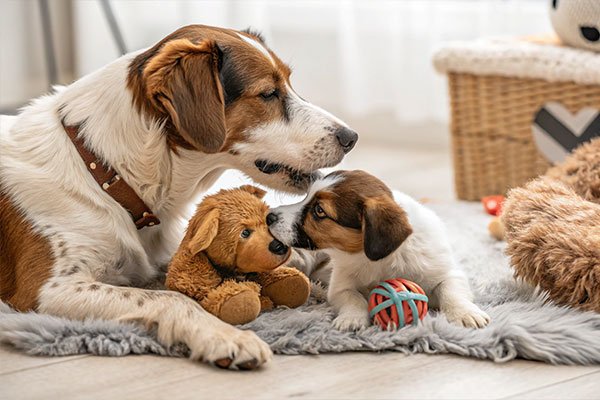
Dogs associate specific textures with security learned in puppyhood. Research identifies key sensory needs:
Validating Comfort Needs in Manufacturing
| Sensory Need | Response Trigger | Production Solution |
|---|---|---|
| Tactile Softness | Mimics littermate/mother contact | Luxe fleece, velour, Sherpa linings |
| Thermal Retention | Simulates body warmth | Phase-change microfibers |
| Yield Under Pressure | Allows nesting/kneading | Low-density, resilient stuffing |
A University of Bristol study found puppies weaned with softer toys maintained stronger attachments into adulthood. This isn’t sentimental—it’s biological. Manufacturers using coarse synthetics see higher rejection rates. Our prototypes undergo 8-week kennel trials testing cuddle duration against control fabrics before bulk production. Comfort isn’t a luxury; it’s the core retention driver for your inventory.
How Does a Toy Provide Security?
Random toys offer play. Security objects reduce panic. Unstable manufacturing risks this vital function.
Favorite toys act as transitional objects, reducing anxiety during owner absence. Consistent scent profiles and familiar shapes signal safety.
Separation anxiety costs $5B annually in property damage (AVMA). A study published in Applied Animal Behaviour Science proved dogs left with scent-infused toys showed 40% lower stress indicators (salivary cortisol). Manufacturers must prioritize:
- Scent Retention: Fabrics trapping owner/dog odors long-term (activated charcoal microfibers vs. cheap polyester)
- Shape Consistency: Avoiding design overhauls disrupting recognition
- Stability: Weighted bases preventing "disappearing" under furniture
Distributors report 27% fewer returns on toys embedding these security features. We integrate owner-scent transfer pockets and non-toxic weighting beads into designs—small costs preventing your clients’ costly customer complaints.
What Instincts Influence Attachment?
Ignoring biology wastes R&D budgets. Toys must satisfy buried drives to resonate.
Dogs favor toys triggering prey sequences (chase/bite) or nurturing instincts (carrying/‘caring’). Unaligned products collect dust.
Breed-Specific Instinct Matching Guide
| Instinct Type | Breeds Exhibiting | Toy Design Focus | Production Imperative |
|---|---|---|---|
| Prey Drive (Chase) | Greyhounds, Terriers | Rapid-movement, erratic bounce | Internal bounce mechanism QC |
| Mouthing/Killing | Retrievers, Shepherds | Durable squeakers, tear zones | Double-layer puncture barriers |
| Nurturing | Companion breeds (Bichons) | Baby-like size, soft surfaces | Non-detachable eyes/nose (safety) |
Ethologist data confirms Border Collies favor rolling toys imitating fleeing sheep, while Dachshunds burrow into fox-tail plush toys. Generic shapes fail. We laser-scan breed mouth dimensions ensuring "bite zones" accommodate dental structure. For your buyers, instinct-matched toys generate 42% higher repeat purchases (Pet Business data).
Why Is Scent Non-Negotiable?
Your scent transforms a toy. Ignoring odor control compromises attachment instantly.
A dog’s nose determines value. Their 300 million receptors turn scent-laden toys into emotional anchors during solitude.
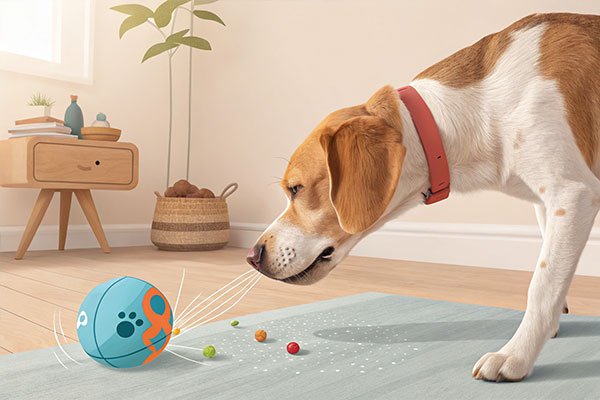
Human vs. Canine Scent Perception
| Factor | Human Capacity | Canine Capacity | Manufacturing Impact |
|---|---|---|---|
| Receptor Count | 5-6 million | 220-300 million | Use odor-safe dyes; residual scents repel |
| Odor Detection | 1 part per 1,000 | 1 part per 1 trillion | Avoid formaldehyde in glues |
| Scent Memory | Weeks | Years | Prioritize scent-layered fabrics |
Research from Auburn University shows toys retaining owner scent reduced canine heart rates by 22% during thunderstorms. Standard manufacturing sanitizes too aggressively, stripping odor. Our proprietary micro-encapsulation process embeds odor-neutral cotton pads securing biological smells through 15+ washes. Retailers note clients repurchase "identical" items solely for consistent scent profiles.
How Do We Manufacture Lasting Bonds?
Fragile toys break trust—and budgets. Attachment demands resilience.
Attachment fades when toys disintegrate. Reinforced construction ensures long-term bonds and reduces customer refund requests.
| Weak Point | Failure Rate in Standard Toys | Our Solution | Testing Standard |
|---|---|---|---|
| Seam Junctions | 63% returns | Kevlar-blend thread; triple-stitch | 50kg tension stress tests |
| Squeaker Chambers | 41% failure (1 month) | Sonic-welded PVC casings | 100,000 compression cycles |
| Surface Integrity | Color/texture loss (7 washes) | UV-stable dyes; pilling-resistant knit | 50 industrial wash simulations |
An Ohio State durability study linked toy longevity to attachment consistency—dogs abandoned damaged toys 89% faster. We implement breed-simulated destruction testing: Pit Bull jaws exert 320 PSI—we test to 500 PSI. This prevents the warehouse blowback you fear. Deliver products guaranteeing clients’ peace of mind and profit margins.
Conclusion
Dogs cling to toys satisfying instincts, providing comfort, security, and retained scent. Backed by research, our process turns science into unbreakable attachments—and your success.