跳到内容
跳到内容 
As a pet product manufacturer, I understand the struggle of choosing the right tie-out system for different dog sizes. The wrong choice can lead to escapes, injuries, or damaged property – let’s solve this problem systematically.
The ideal tie-out depends on your dog’s weight, strength and temperament. We’ll examine four weight categories (petite, medium, large and giant breeds) with specific product recommendations for each.
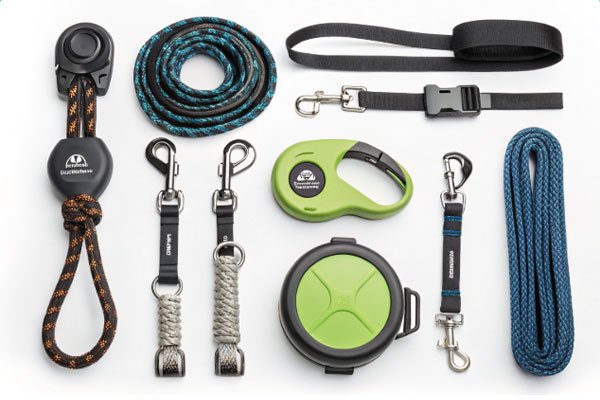
Selecting proper restraint equipment shows responsible pet ownership while keeping your furry friend safe. Read on to discover the perfect solution for your dog’s specific needs.
Puppies and Petite Breeds?
Small dogs and puppies need lightweight restraints that don’t overwhelm their delicate frames. Many owners underestimate the strength of even tiny dogs.
For dogs under 20 pounds, we recommend a 3/8" wide nylon tie-out with 10-15 foot range and swivel clips. This prevents tangles while providing enough freedom. The material should be soft yet durable.
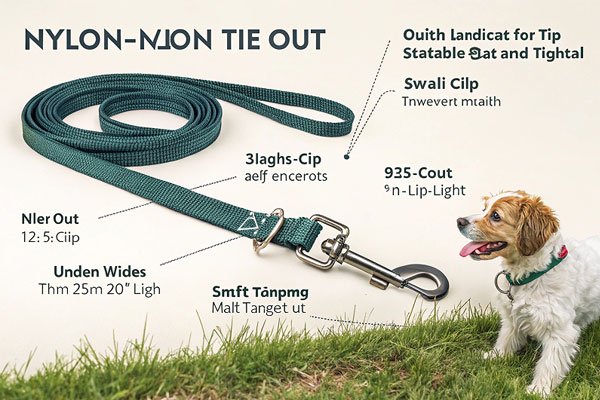
Key Considerations for Small Dogs
| Factor | Why It Matters | Our Recommendation |
|---|---|---|
| Weight capacity | Small dogs can still pull surprisingly hard | Minimum 50lb rated |
| Length | Enough space without getting tangled | 10-15 feet |
| Material | Comfort vs durability balance | Soft nylon webbing |
| Clip type | Prevents accidental release | Swivel bolt snap |
| Visibility | Avoid trip hazards | Bright colors |
Puppies require special attention – their tie-outs should incorporate chew-resistant coating since teething leads to destructive chewing. We add bitter apple flavoring to our petite breed cables as an extra deterrent.
Medium Breeds – Up to 50 pounds?
Medium-sized dogs like Beagles and Spaniels need sturdier equipment that can handle bursts of energy. A flimsy tie-out won’t last a week with these enthusiastic pets.
Choose a 1/2" wide steel cable or reinforced polyester tie-out with 15-20 foot range. The hardware should include a spring-loaded tensioner to absorb sudden pulls without snapping.
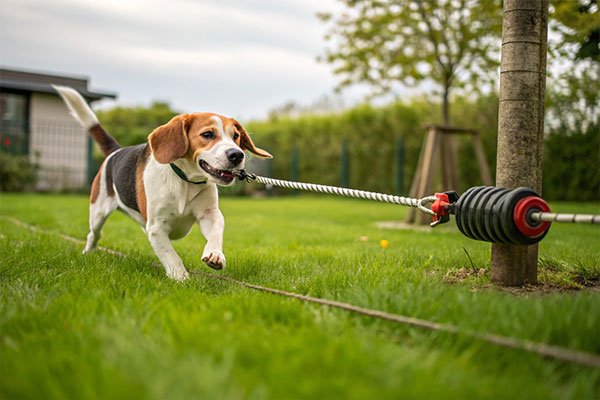
Engineering for Medium Dogs
Medium breeds present unique challenges:
-
Strength Variance: A 25lb Terrier may pull harder than a 45lb Bulldog. We test all medium tie-outs to 100lb capacity for safety margins.
-
Weather Resistance: These dogs often stay outside longer. Our cables use marine-grade stainless steel hardware that won’t rust.
-
Attachment Points: Fixed-eye screws work better than stakes for medium dogs, as they frequently dig or pull at angles.
-
Tangle Prevention: The cable should lay flat rather than coil to avoid dangerous knots during play.
We’ve found braided steel cores with vinyl coating provide the best combination of strength and flexibility for this weight class.
Large Breeds – Up to 80 pounds?
Powerful dogs like Labradors and German Shepherds require commercial-grade tie-outs built for serious strength. Standard pet store options often fail dangerously.
Opt for a 5/8" galvanized aircraft cable with thick rubber coating, minimum 20 foot length, and industrial-strength swivels. The anchor point must be reinforced – we recommend wall-mounted eyebolts in concrete.
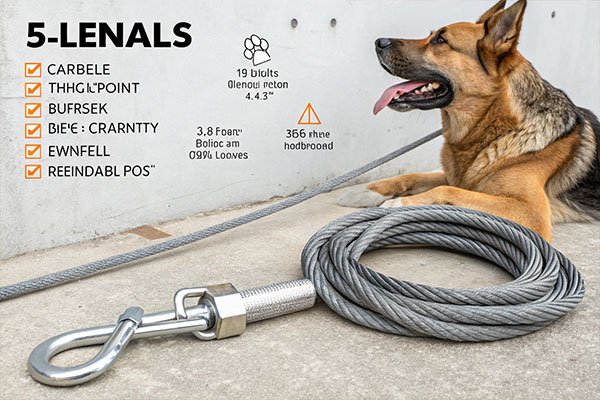
Why Standard Tie-Outs Fail Big Dogs
Most failures occur because:
- Material Fatigue: Thin cables develop weak spots from repeated stress
- Hardware Failure: Cheap snaps bend or open under pressure
- Anchor Issues: Stakes pull out of soft ground easily
Our heavy-duty tie-outs use:
- 7×7 Stranded Steel Core: More flexible yet stronger than single-strand cables
- Double-Locking Carabiners: Requires two motions to open, preventing accidents
- Rubberized Coating: Protects against weather and chewing while being gentler on trees
- Tested to 500lbs: Far exceeding typical dog weights for safety buffers
Giant Breeds – Up to 150 pounds?
Massive dogs like Great Danes and Mastiffs need specialized restraint systems that combine strength with gentle handling. Ordinary tie-outs pose serious risks with these gentle giants.
For giant breeds, we suggest a custom 1" wide nylon/fiber composite tie-out with 30 foot range, backed by a ground anchor system. The material must stretch slightly to absorb shock without recoil.
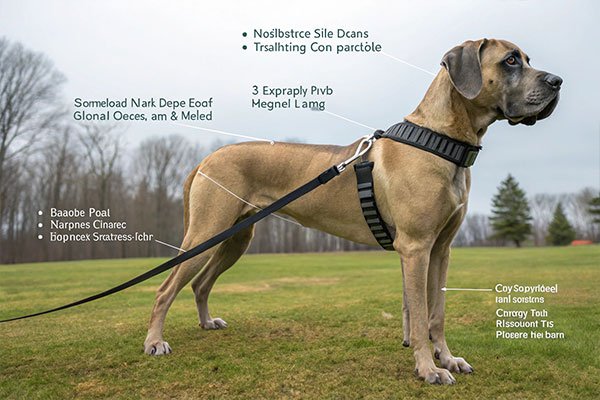
Custom Solutions for Giant Dogs
| Typical Problems | Our Solutions |
|---|---|
| Neck strain from heavy pulling | Weight-distributing harness attachment points |
| Ground anchor failures | 24" screw-in earth anchors with load-bearing plates |
| Cable abrasion | Abrasion-resistant sleeves at friction points |
| Improper length | Custom sizing based on running space needs |
We construct these tie-outs with:
- Military-grade nylon woven around steel cores
- Hydraulic shock absorbers to cushion sudden movements
- Rotating junction points that prevent twisting
- Reflective stitching for nighttime visibility
Each giant breed tie-out undergoes 1,000-pound stress testing before leaving our factory.
Conclusion
Choosing the right tie-out requires matching product specifications to your dog’s size, strength and behavior traits. When in doubt, always select a higher weight capacity than expected – safety should never be compromised.